Thursday, June 29, 2006

What is Beautiful?


One last set of photos from Guatemala… these are from Antigua, the old Spanish colonial capital of Guatemala about an hour outside of Guatemala City. Antigua has all the charm you expect from such a city. Narrow, cobblestone streets.
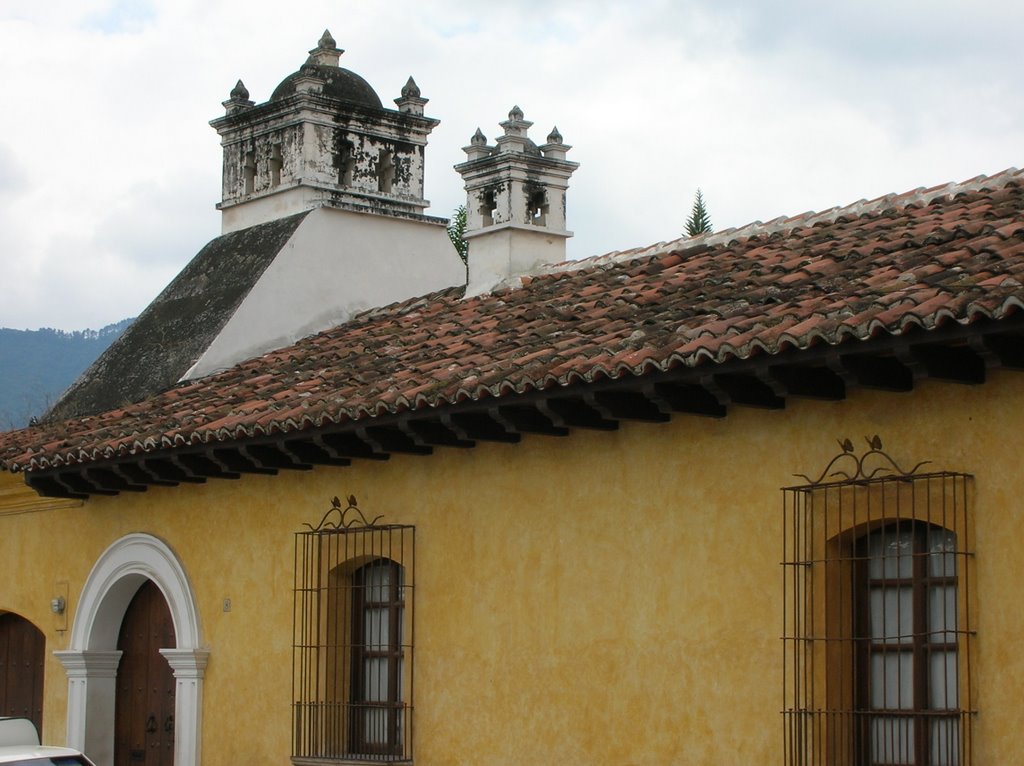

Single story stucco buildings painted in bright colors with red tile roofs. A central square with a cathedral at one end, a large fountain in the middle, and arched walkways on the three remaining sides. Trees, benches, and people everywhere… locals in traditional Mayan clothing, shopkeepers in western wear, tourists loaded with cameras, and the scores of language students that flock to Antigua each year.
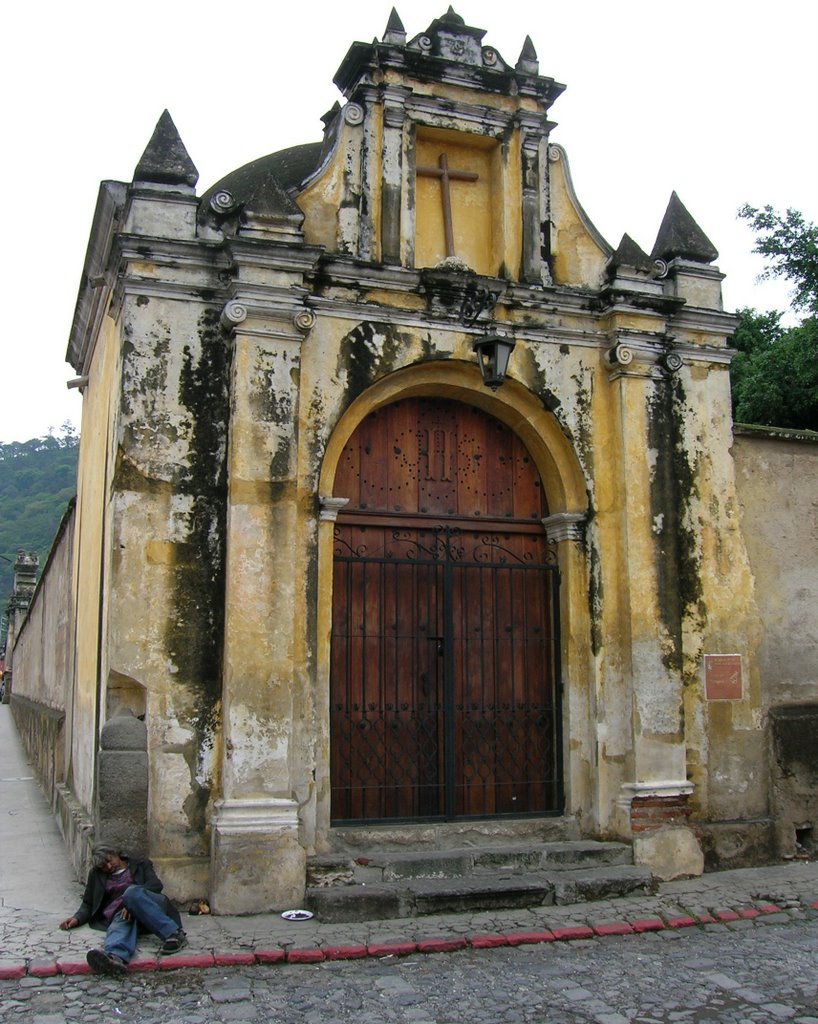
In addition, a few hundred years ago an earthquake nearly destroyed the city. Rather than rebuilding or tearing down the remnants, they left the ruins of churches, convents, and monasteries throughout the city.


La Merced was located at one end of the city, down a cobblestone street spanned by a yellow archway. We got caught on this street in a torrential downpour our last night in Antigua. A crack of lightning nearly overhead sent us running for cover into Pollo Campero, Jim’s favorite fast food joint in Guatemala.

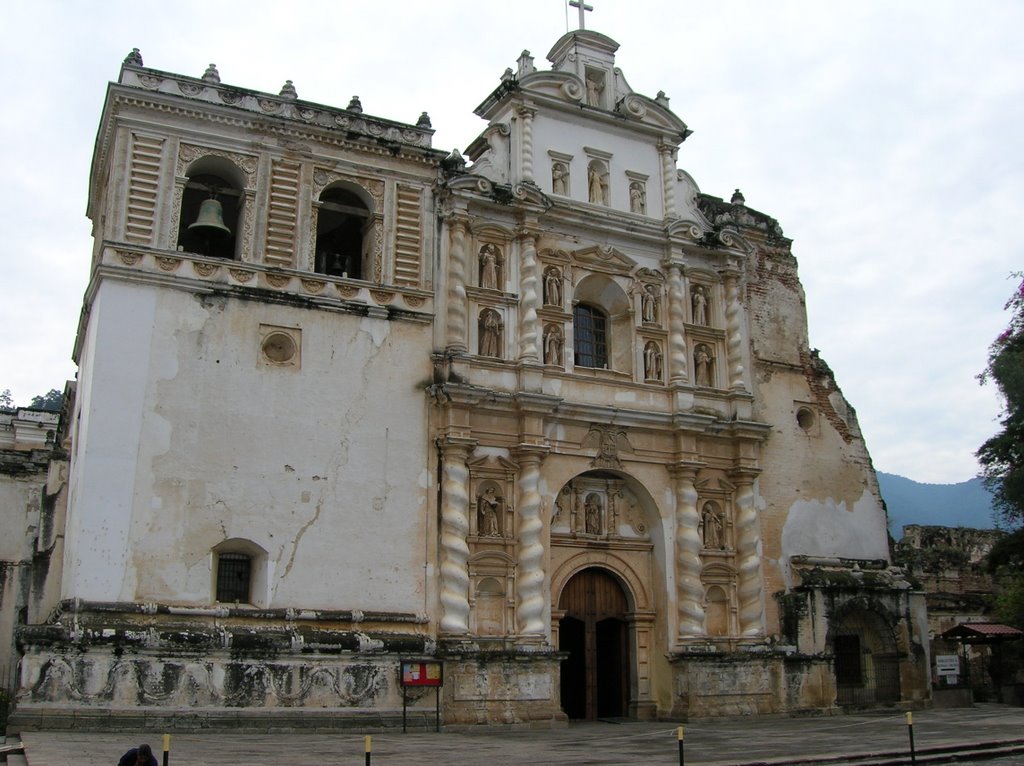
Our first ruin was San Francisco. The large cathedral was still standing and used for worship. Out back, though, were the ruins of a monastery. Little was left standing.
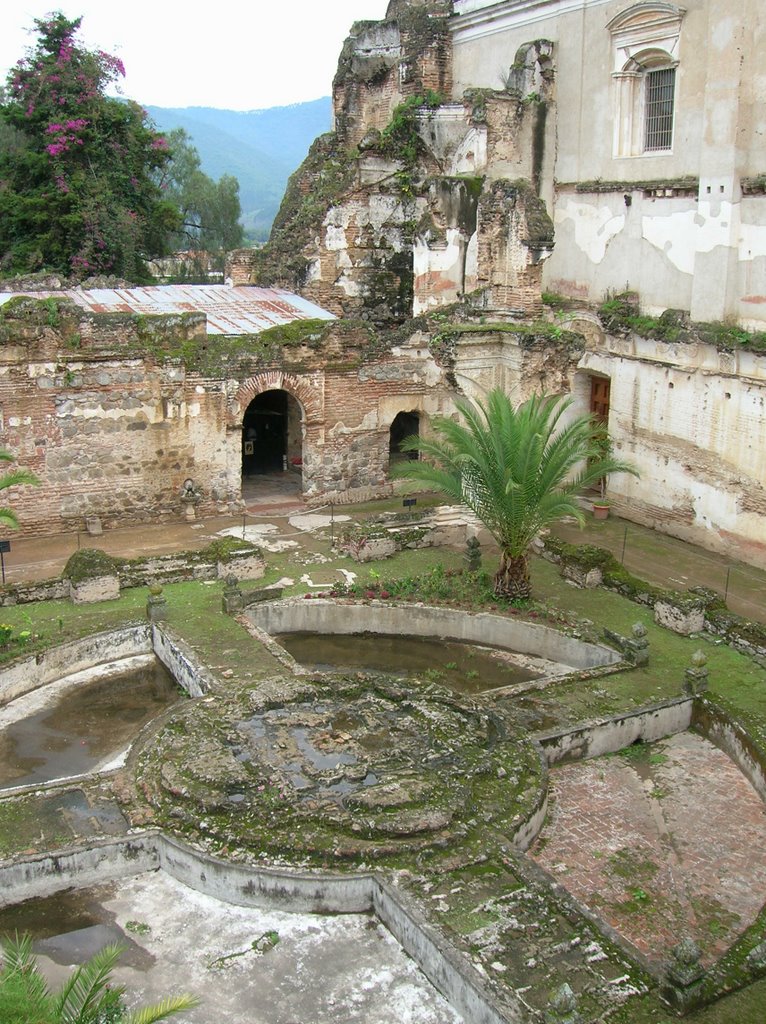
The remnants of a pool, some partial walls and doorways. A group of young boys had all paid the 5 quetzals entrance fee in order to play hide and seek among the stones.
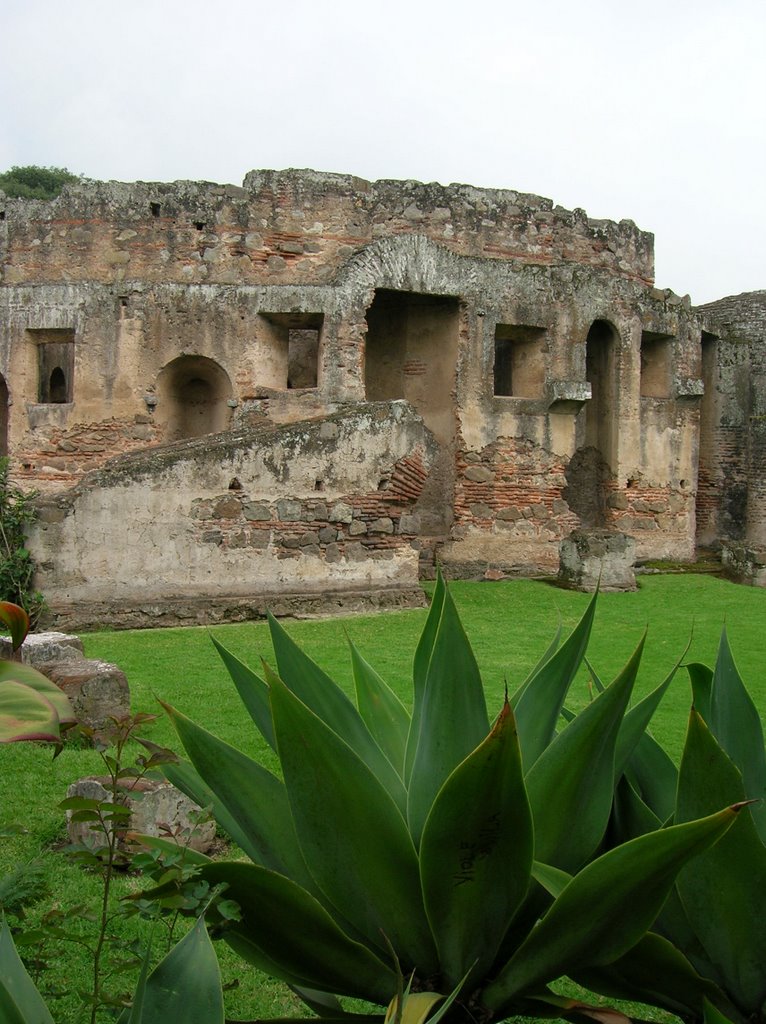


Later we visited Las Capuchinas, a convent at the other end of the city. A central courtyard was surrounded by a series of small cells that served as home for the nuns. No contact with the outside world. Just a five by five cell.


Our final visit was the Cathedral of San Jose, located on the main square. The whole cathedral complex spanned an entire city block. Dome after dome leading up to the main spire. All that is left are the soaring archways with their beautiful carvings of angels and saints.

We stayed in a wonderful, colonial style hotel called Posada Lazos Fuertas, owned by a non-profit organization that supports the children who live in the dumps of Guatemala City. There was a rooftop terrace with magnificent views of the city and the volcanoes.


We spent one afternoon sitting in the town square. Jim chatted with a New Zealand tourist who was traveling from Tierra del Fuego across South and Central America to the United States. Cathy and I were befriended by three little kids… one young girl and her 3 year old brother were selling trinkets to tourists. The other girl just came and stood next to me until I started talking to her. She didn’t want anything. Just someone to talk to. She was fascinated by our cameras. Asked us to take pictures of everything. I wish I could have brought her home.

I’m not sure what it means that Cathy and I knew little about the buildings we took pictures of. I had done some reading before hand to get a sense of the history of the city, but once we arrived, we were more captivated by the architectural beauty, the lines and angles, the possible photographs. We saw most of them through the lenses of our respective cameras. Someone asked me if it was possible to be present in the moment while taking pictures. What does it mean to be absorbed by the outward form detached from the context… the history and the people? On the one hand, I think aesthetic beauty is a tremendous gift from God, a work of grace, an added blessing to a world already richly blessed with life and love. A beautiful flower, an amazing sunset, a stunning cathedral. I often think these are all unnecessary in our world, yet God chose to give such beauty as a gift because of God’s great love for us. On the other hand, I have to remind myself that aesthetic beauty can often hide great evil and ugliness. These churches and convents, while places of worship, were also signs of conquest, signs of Spanish culture being forced upon the people of Guatemala. While outwardly beautiful, they probably evoke other emotions from those who lost their lives and culture at the hands of their colonizers. Can I admire and glorify the aesthetic beauty of these buildings without glorifying the colonial past of the country? I suppose this blog is an attempt at just that. May you enjoy the beauty, but may you value the people of Guatemala even more.

Tuesday, June 13, 2006

A Jungle Trek to the Grand Jaguar

We woke up at 4:30 am to catch the plane to Tikal in the northern part of Guatemala. Though we were traveling to one of the most ancient sites in the country, I was first struck by the commercial nature of the area. Special fees to get into the park, extra fees to stay for the sunset or get up for the sunrise, maps available at a steep price, guides with a monopoly on special treks, tours that included meals but no beverages in the sweltering jungle heat. Amidst all this, though, was a grand adventure.

As we drove into the park, we passed several yellow caution signs. Rather than pictures of children crossing the street, they bore black outlines of jaguars, wild turkeys, snakes, and other wild animals. The shuttle drivers were timed, not for speed, but rather to insure that they were sufficiently cautious on the road to the hotel. At the gate, all buildings are left behind and for the next 20 minutes you are surrounded by jungle and, if you are lucky, you catch your first glimpses of the animals. You then come upon the few hotels, restaurants, and stores located within the park, including ours, the Jungle Lodge.

The Jungle Lodge is made up of renovated bungalows once used by the archeologists from the University of Pennsylvania who first uncovered the site. Inside are queen size beds draped in mosquito netting, a beautiful large bathroom, and ceiling fans which only work for the few hours in the morning and evening when the electricity is on. The bungalows are situated around a jungle courtyard. One of my favorite memories of our time in Tikal is sitting on the porch after a long day’s hike listening to the rain and watching the monkeys, toucans, and other birds climbing through the trees.

After dropping our bags in the room (we were only allowed to bring 20 lbs., which is a lot more than we realized!), we met up with Carlos, our guide, and a retired couple from Northern California for our hike to the ruins. I have to admit, I was really nervous at first. All the talk of jaguars and monkeys, the sweltering heat, the dense growth of jungle all around. It was about 15 minutes before we came across the first stellae, a piece of stone about 5 feet high with the image of a Mayan king (or queen) carved on the front. To be honest, we were more interested in the spider monkeys overhead, our first sighting! A few minutes later, though, off on the right, was the first pyramid. Still partially covered by foliage, the pyramid faced a small plaza with stellae lined up along the front. And a little farther on, around a corner, the spire of temple stood in the distance.

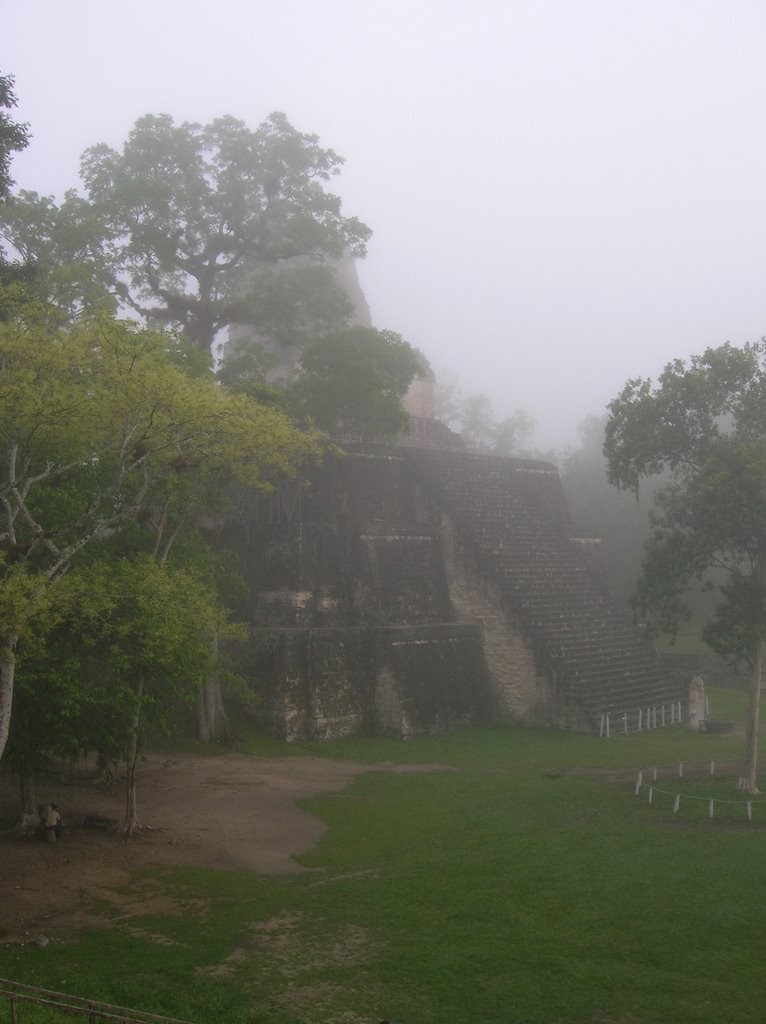
This was the Grand Plaza. Everything you imagined Mayan ruins to be. On one side, three partially visible pyramids and buried within these the remains of a great stone mask carved into the rock.

On the other, the ruins of the living quarters, partial walls, steps, rooms, just a small portion of the vast city that once encompassed this region. And at each end, giant temples overlooking it all.
The temple of the mask was the smaller of the two. Along one edge were wooden staircases that led to platform near the top.

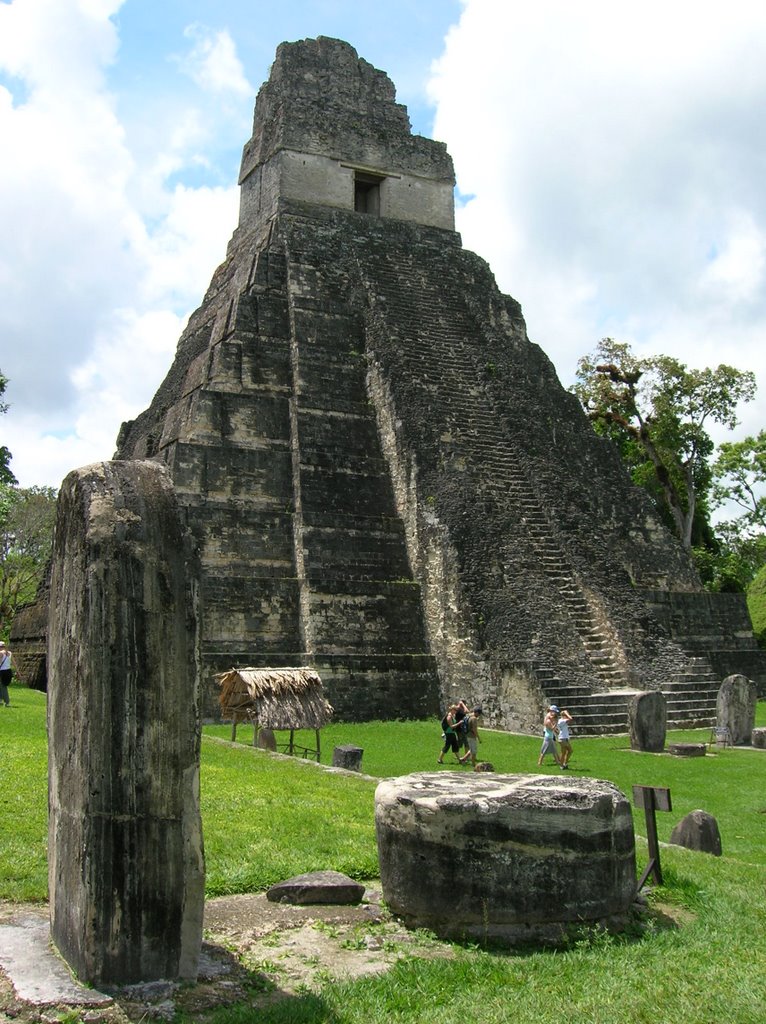
From there, you looked across to the Grand Jaguar, the most famous of the temples in Tikal. They are stunning works of art and science that served as the center piece of a great civilization. The Mayan rulers would climb to the top of the great temple to offer blood sacrifices on behalf of their people. And then one day, they vanished. No one seems to really know why. There are many theories, but the archeological evidence seems to suggest that one day they all just walked away. Something that by all earthly standards was permanent, powerful, the pinnacle of human success… and poof… gone. One is left with a sense of the transitory nature of this world and a gratefulness for faith in an eternal and unchanging God.

From the Grand Plaza we continued on to Temple IV, about 20 minutes further into the jungle. At about 5:00 am the next morning we would join a group of college students from the United States and another tour guide for a silent hike in the dark back to this temple to watch the sky lighten in the mist and to hear the jungle come alive. It turned out to be much more exciting in theory than reality. We had been hoping for a sunrise and an army of howler monkeys screeching in the morning light. Instead, we got a few birds, a monkey or two, and a fantastic view.
From Temple IV you can see the tops of three other temples peaking out from the jungle. It is a scene made famous at the end of Return of the Jedi, just before Hans and Luke receive their medals of valor from Princess Leia.

One other adventure from the jungle before I close. We were only in Tikal for a day and a half. After lunch the first day, we all needed a rest (well, maybe not Jim…). We were dripping with sweat, gasping for water, and in desperate need of showers. We knew, though, that we needed to make one more trek into Tikal before it closed at 6:00 pm. So, despite the looming clouds, we headed out for Temple VI, the Temple of the Inscriptions. It had rained every afternoon in Guatemala, including an evening thunderstorm that sent us running for cover in Antigua, but we thought the shower would quickly pass. So, we pushed on. The three of us, alone in the jungle, on a dirt path, through the rain, searching for a temple hidden in the far reaches of Tikal. We were sure it would be just around the next corner… or the next… The light rain got stronger. A flash of lightning.
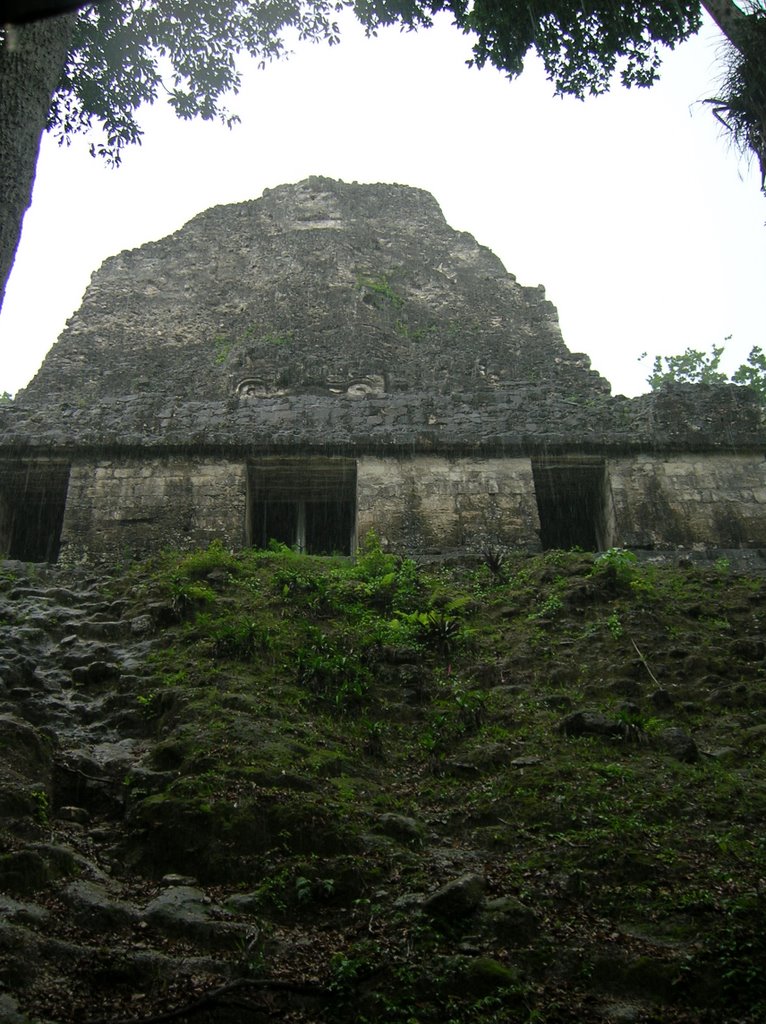
But we must be close! And finally, through the mist, there it was, the Temple of the Inscriptions. Different than all the others with three archways and the carvings on the lentil still in tact. To be honest, we didn’t stay long. A moment under the canopy to take pictures and adjust our backpacks. Then we started running for the lodge.

A grand adventure. I don’t feel like an adventurer. I remember thinking, “Who is this person hiking through the jungle?” We’re just normal people. Two pastors and school administrator. Okay, Cathy grew up all over the world as a missionary kid, but I didn’t. I am not that exotic. I am scared all the time. I love being at home. But here I am, hiking through Mayan ruins in the jungles of Guatemala. Crazy.

Lake Atitlan

I've been back from Guatemala for about a week now... from there straight to the Annual Meeting of the Evangelical Covenant Church in Grand Rapids, Michigan. Definitely a culture shock! Actually, I had about four days in between. The most shocking part of returning... Two weeks getting up early and hiking around Guatemala for hours each day and my body feels great. Two days back in the office and I am a wreck! My back hurts. Headaches. Eyes strained from sitting in front of a computer. And this is called progress. I am not sure our bodies are meant for this world we've created.

There was no access to the internet for the last few days in Guatemala, so I'll be catching up in the next few blogs.
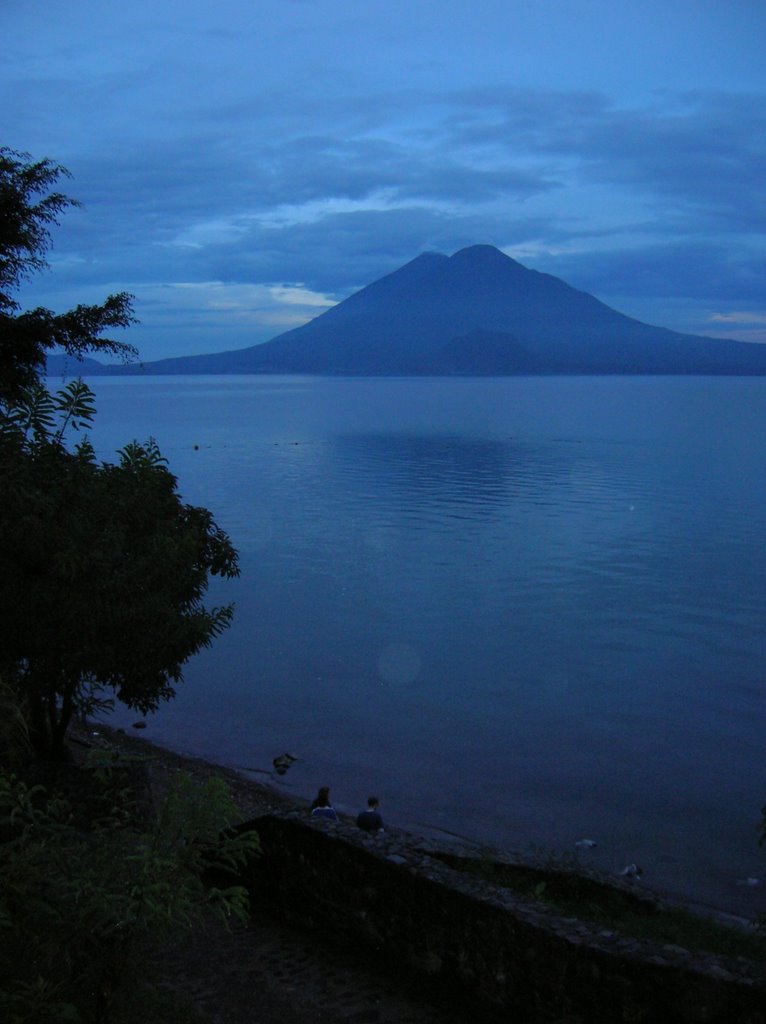
After Santa Apolonia, we made our way to Panajachel... the incredibly tacky little tourist town on the shores of Lake Atitlan. The drive was a bit of an adventure. Julio was gracious enough to take us in his minivan. Only one stop by the local police and one flat tire, but we made it safely. After winding over mountain ridges for two hours, we descended down through the town of Solola and on to Pana. A few miles outside of the city, the road opened up onto breathtaking views of Lake Atitlan and its three breathtaking volcanoes.

We made our way to the main street lined with restaurants and shops, including many stalls stocked with local crafts and staffed by the locals in their traditional Mayan clothing. We stayed just off the main strip at the Bungalows El Aguacatal (the Avocado). They were not bad, once Jim cleared the spiders out of my bedroom. To be honest, it was awfully nice to allow someone else to do that for me! I am so used to taking care of myself.

We spent one day on a private boat tour of the lake. I realize the irony of going from a small town in mountains of Guatemala to a private boat tour on Lake Atitlan. I am not sure how to resolve it in my own mind. In high school, I probably would have wanted to cancel the remainder of my trip, giving all my money to those in need in Santa Apolonia. Now I know enough to see that my small gift would do little to change the great inequities in our world, the systems that continue to make the rich richer and the poor poorer. But is that any reason not to live sacrificially? Have I succombed to the greed of my culture? Have I chosen an easy path of discipleship rather than the road less traveled? I work hard for my money and shouldn't I be able to enjoy the material benefits God has given me? But can I really say that I work harder than any of the people of Santa Apolonia? Do I even work a fraction of the hours they do?

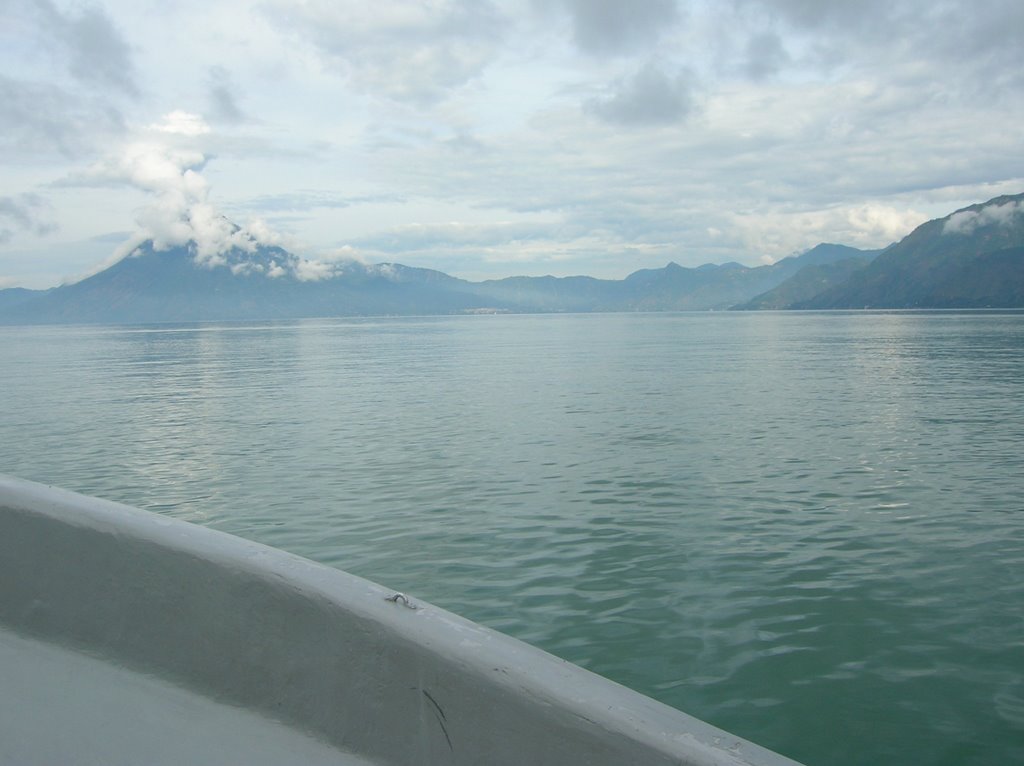
With all those thoughts swirling around in my mind, we boarded our small barco with David, a local college student and amateur photographer, who captained his father's boat. The water was smooth and glassy. The views were amazing. Over each of the volcanoes hung a billow of clouds that looked like they were pouring out of the crater.

David took us on a tour of three of the smaller towns nestled in the hillsides around the edge of the lake. There were few tourists in the villages. And most of the women and men wore traditional Mayan clothing.

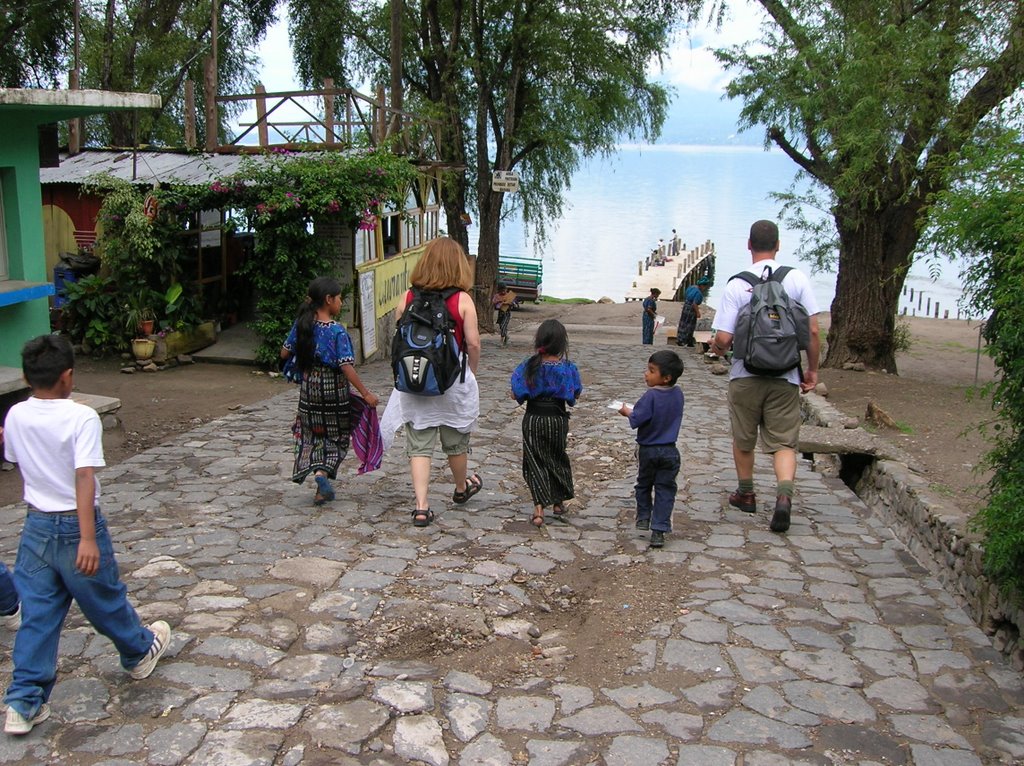
In the first town, Santa Catarina, we watched a parade of school children carrying posters about ecological issues in Guatemala. Children greeted us at the boat and escorted us back to the lake selling small trinkets and offering to pose for pictures for a quetzal. Cathy spoke to each and everyone of them. She was amazing with the children.

In San Antonio Palopo, we hiked to the small Catholic church on the hillside with a fantastic view of the lake. Along the way we found a small outlet store for local pottery and a building where they demonstrated various weaving techniques.

The main street was bustling with the Monday morning market. This time Cathy befriended an older Mayan woman who insisted on showing her how to tie up her hair according to the local fashion. Cathy, of course, eventually bought the brightly woven fabric tie for her hair.

The final town, Santiago Atitlan, was the main tourist destination on the other side of the lake. Nestled at the back of an inlet at the base of the San Pedro volcano. As we floated into the town, we saw several men fishing along the shoreline and a group of women doing laundry. As we pulled up to the dock, several boys ran up to us offering to show us Maximon, the local party saint. Known for his smoking and drinking and hidden in a small, dark room in the back of a small home, we passed on this opportunity. Instead, we made our way to the church in the local square. In the church was a monument to the people of Santiago Atitlan who were killed during the civil war. Santiago Atitlan is known for being the first village in the country to expel the armed forces. For years it was caught between the guerillas based on the hillsides and government forces. Hundreds disappeared accused of siding with the guerilla army. In 1990, drunken soldiers shot a villager. The townspeople had finally had enough. They marched in mass to the army base. In fear, the soldiers opened fire killing 13 and wounding 20. The incident drew international attention and the army finally withdrew from the town.

1990... just 16 years ago this town was occupied by armed forces. Today, in the center square, villagers are gathered with bushels of avocadoes, loading them on brightly painted chicken buses to send to market. And Cathy, Jim, and I are wandering peacefully through the streets with little sense of the willpower and strength of these people.

Tuesday, June 06, 2006

Guatemala, Part IV

Things had been going too well on this trip to continue! Yesterday we hired "un barco privado" (a private boat) to take us around Lake Atitlan, said to be the most beautiful lake in the world. Though not entirely clear, the day was beautiful. I think on a clear day the lake would be amazing, surrounded by three volcanoes and steep shorelines lined with villages. In the midst and haze it was beautiful. The boat took us to several villages along the shoreline. Given the early hour, a weekday, and the rainy season, we were generally one of only five or six tourists in each of the villages. We were greeted at the shoreline by children and women in traditional dress selling us handcrafts or pictures for a quetzal or two. From there we would hike up the main street to the small catholic churches overlooking the lake. In San Antonio Palopo, we climbed a cobblestone path through houses, tiendas, a weaving center, and a small outlet for local ceramics. Along the street parallel to the church the local market was in full swing and we spent a few minutes just watching life in this little village. In Santa Catarina Palopo, we watched a parade of the local school children, most of the girls in bright blue traditional dress, some with red head coverings.

It was a different experience to observe these villages as a total outsider after spending a few days with a family in Santa Apolonia. I always feel a bit awkward taking pictures and watching as people go about their normal lives. It feels like I have somehow turned them into objects rather than living human beings to relate with as fellow children of God. Feminist and other theories of research challenge whether one should consider those being researched as objects of study to consider objectively as a supposedly neutral outsider or wheter they should be considered fellow subjects in the process, defining their own truths and particpating in the analysis of their own lives and situations. In the past, much damage has been done to those considered less than the researcher... women, children, those of different races, those of lower classes, those of different cultures.

Having said all of that, I am grateful that Cathy has little fear and takes wonderful pictures of the people in these villages. I will post some later. She has a natural love for people that I am lacking and it shows in her photographs. Rather than treating these people as objects, her pictures are expressions of her love for people all over the world and her honoring of their beauty.
After our day on the lake, we returned to the city of Antigua, former colonial capital of Guatemala. Much of the city was destroyed by an earthquake in the 1700's and the ruins of the old churches and monasteries are visible on almost every cobblestone street. The adobe and plaster houses are a mirade of pastels and other bright colors with rich wood doors and accents. Our hotel, Posada Lazos Fuertas, is just beautiful! The service has been fantastic and all the proceeds benefit a local children's organization.

When we returned last night, we hit the first snags of the trip. A traffic jam in Chimeltenango. A downpour in Antigua that left us soaking wet and ducking for cover at the sound of the thunder and lightning. We were up and waiting at 6:00 am for our tour of the Pacaya vocano, but they never arrived. Once we are over our disappointment, we'll enjoy a relaxing day in Antigua and dinner in Guatemala City with Dan and Libby Englehorn, alumni from North Park. Tomorrow, Tikal!

Sunday, June 04, 2006

Guatemala, Part III

On Thursday, a shuttle dropped Cathy, Jim, and I off on the side of the PanAmerican Highway. Waiting to greet us was Julio Ordonez, a friend of Cathy and Jim's, from the little town of Santa Apolonia about fifteen minutes up into the mountains outside of Tecpan, Guatemala. The town is set on a mountain side and the fields extend throughout the mountain valleys surrounding the town. There is so much to tell about our trip there! But for the moment, here are a few highlights... We woke up at 6.00 am the first morning for a walk through the misty mountain passes around the village. We were greeted by the local farmers on their way to work in their fields and by women on the way to the mill to grind corn for the day.

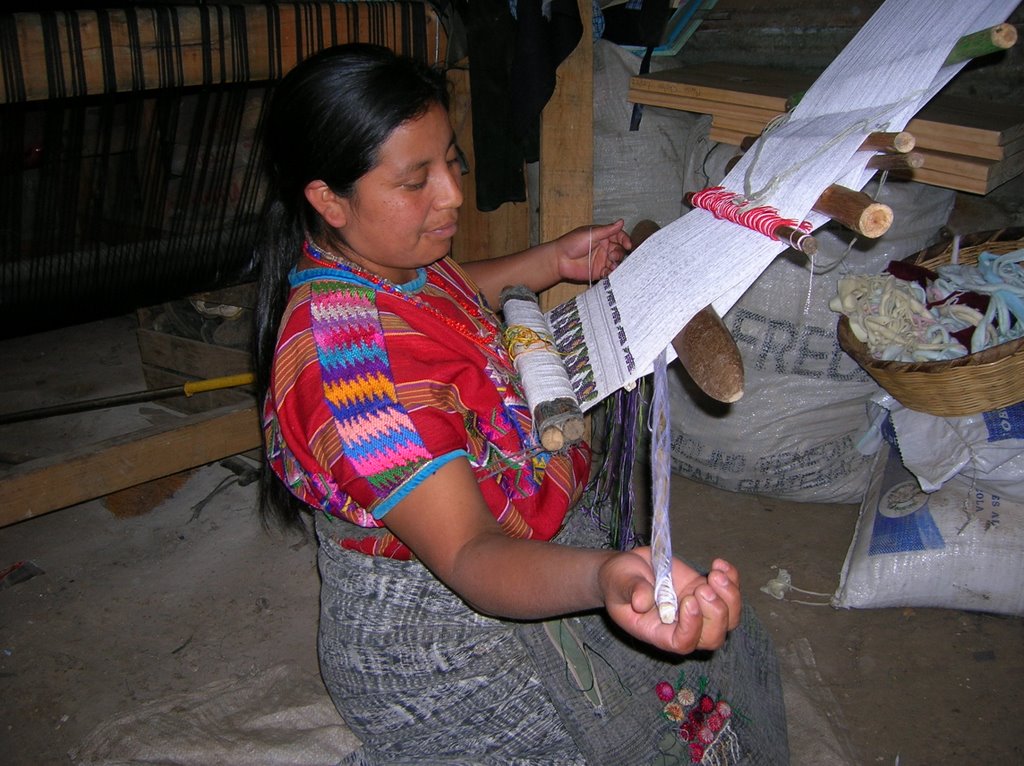
The women wear traditional Mayan clothing... a richly embroidered top called a huipile and a long skirt woven by hand on local looms. We were able to spend a few minutes at the local tailor's home, across the street from Julio, to see how the weaving is done. On this loom, a young woman is working on the center part of one of the huipiles. It will take her at least a month to complete this particular piece. In the shop behind her was the huge wooden loom used to create the skirts.
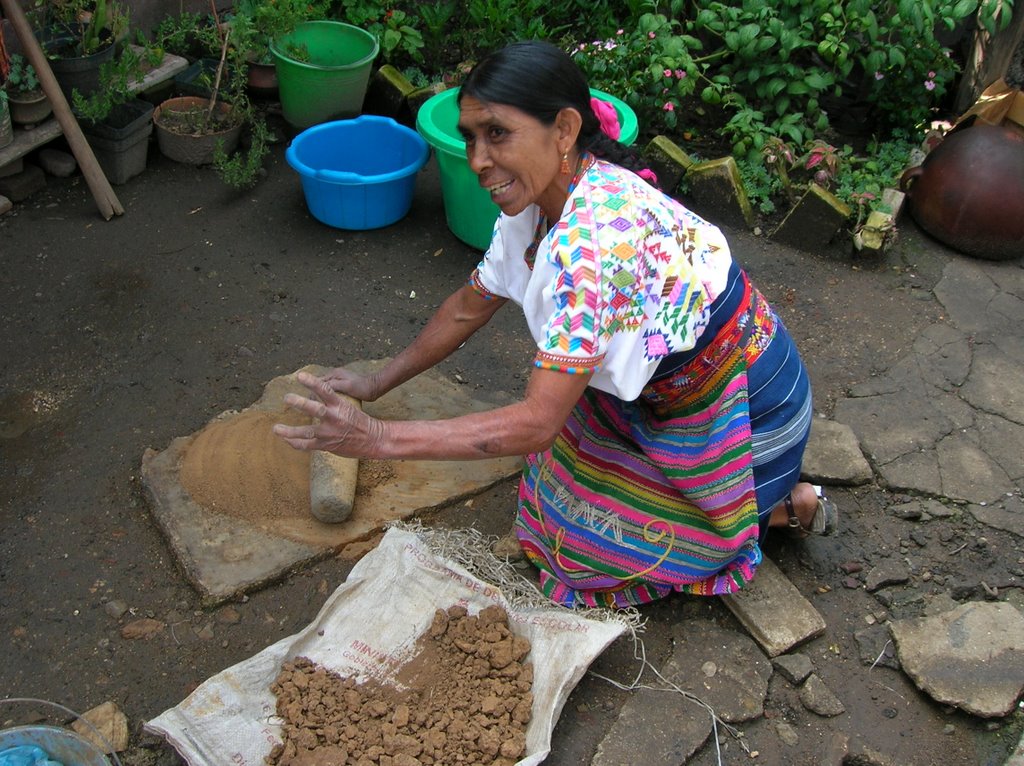
Julio also took us to visit with Pasquala. We entered her small home through a bright blue metal door walking into a courtyard full of pottery. She took us through the courtyard, past the kitchen, to the back of the house where she makes her pots. The clay comes from the hillside outside of Santa Apolonia. She grinds it into powder, mixes it with water, and then proceeds to shape the pot.
There is no pottery wheel. Instead, she places the clay on the ground and shapes it with her hands, spinning round and round until it takes the shape she desires. Later on it is painted and fired in an earthen kiln. The final product is a rich, red, terra cotta pot colored with black shadings from the kiln.

I have not even touched on the evening prayer meeting, conversations with a modern Mayan family, seeing the resemblences between the Mayan girls and my own nieces, or the afternoon at Iximche, a local Mayan ruin. Those will have to wait for later blogs. For the moment, I leave you with images of traditions that are quickly fading away. Pasquala and her 83 year old aunt are the only ones left in the village who still use the ancient technique for making pots. While many Guatemalans, especially the women, still wear traditional clothing, the family we stayed with, including the grandparents, have all opted for more modern, Western dress.

Julio is hoping to be the next mayor of Santa Apolonia. We spent much time talking of improvements he wants to make to the town. We talked of how to preserve the tradition and bring tourists into the city, how to clean up the streets, and bring education to all. As we talked, I was struck by the tension between tradition and resources. Somehow it seems that in our world in order to bring resources to a community, you have to give in to the wider modern culture. In order to improve the quality of living in one area, you have to lose something in another. There doesn't seem to be any way to preserve the sense of community, the love of culture, the connection with the land, and to provide health care, education, and financial resources. I realize that many are trying to walk this fine line in Guatemala and in the United States. But I wonder why the tension itself exists?

Tomorrow we take a boat around Lake Atitlan and the next day hike Mount Pacaya, an active volcano outside of Antigua. Still to come is Tikal, the great Mayan ruin in the north of the country.

Thursday, June 01, 2006

Guatemala, Part II

Well, we arrived safely in Guatemala Tuesday evening. My first impression is being funneled out of the airport down a long hallway and then onto a red carpet lined walkway out into the parking lot. The walkway was lined with people... a set of white plastic chairs lined the right side. I am assuming they were waiting for family members, but it felt like a gallery of people watching these strangers arrive in their country. Then all the people with signs renting cars, offering taxis, names of tourists, names of hotels. It took me a while to find Victor, the driver from Dos Lunas, our hotel. I was grateful to see the sign and then to see my name and flight number on his clipboard.
Dos Lunas was a nice little hotel with a very friendly owner who greets you by name at the door. Our room barely fit the three beds for Jim, Cathy, and I. The trucks rumbled outside and the planes seemed to fly awfully low overhead, but it was a safe place to spend the first night in Guatemala City. The next morning we took a shuttle through the mountains to Antigua, the old colonial capital. We spent the day wandering amidst ruins of churches and convents, down cobblestone streets, into stores full of local crafts, taking lots of pictures, and observing. Women in traditional Mayan dress. Lots of language students from the US and Europe. Other Guatemalans in contemporary clothing riding scooters. A strange mixture of old and new, layered one upon another. We stayed in Posada Lazos Fuertas, this amazing little colonial hotel in the city. Three levels surrounding a small courtyard lined with stone. Old wood pillars and beams lining the hallways. A rooftop terrace with a view of the city.
Today we head on to Santa Apolonia. We are hitching a ride on a shuttle and getting off somewhere along the PanAmerican Highway were Jim and Cathys friend Julio will pick us up. Should be an adventure!

Friday, May 26, 2006

Guatemala, Part I

I leave for Guatemala on Tuesday. I love to say that. I have learned that the best part of an exotic trip is rarely the trip itself. Some people are the adventurous type. I am a homebody who still manages to travel regularly. So each trip is a challenge, pushing me beyond my comfort zone, demanding that I release control of my life, forcing me into contact with those I don’t know, reshaping my understanding of myself and the world. I get stressed choosing places to eat or what to eat. I get tired and crabby after a day of endless decisions. I worry that I am in the wrong place or doing the wrong thing all the time. So why do I keep traveling? Why do I keep putting myself through all of this?

The most noble reason is to learn more of the world… and that is certainly a piece of this trip to Guatemala. I have never been to Central America. I have been to Asia, Europe, and the Middle East, but this will be something different. I have been watching some videos and doing a little reading on the history of the country. I am not sure what it means to be a tourist in a country so recently ravaged by civil war. It has only been 10 years since the peace accords were signed between the government and the guerillas. The village we will be visiting will not be telling us history. They will be telling us the stories of their lives. I am grateful for the chance to grasp even a little more fully the reality of this world and so to better understand who I am and who God is.

I must admit, though, that there are also less noble reasons for going. It has been so much fun telling people where I am going on vacation. Are you doing anything this summer? I am. I’m actually going on vacation with a few friends next week. Where are you going? Guatemala. I say it casually. As if it is no big deal. And wait for the reactions. I must admit, I love the surprise in people’s faces. I love that it changes their perception of me a little.

And I love having the stories to tell, the pictures to show, the odd souvenirs around my home. I love being considered a world traveler. If I am going to be a single, 39 year old, professional woman, I might as well enjoy it. I might as well be the exotic aunt who travels around the world bringing back strange gifts and has an aura of mystery and wanderlust around her. I might as well make the most of my freedom and financial independence.

I realize that my travels are a privilege. I don’t take them entirely for granted. I would trade them in a second for a family and all the accompanying financial responsibilities. But I also realize that many people, single or married, will never have the opportunities I have to travel. Or they will travel for necessity rather than pleasure. I was watching The Motorcycle Diaries this weekend, the story of the young Ernesto “Che” Guevara’s journey across South America. In one scene he and his friend are sitting around a campfire with a couple they met hiking along the road. This couple begins telling them of how their land was taken and their need to travel in order to find work to support their family. They then turn to Che and ask if he is also looking for work. When he answers no, they inquire why he is traveling. Che gets a sheepish look on his face and answers that he is simply traveling for pleasure. It is the beginning of his awakening to the needs of the people, an awakening that would eventually lead him to champion the cause of migrant workers throughout the world.

I don’t foresee such a revolutionary awakening in my own life, but I hope that I allow for the possibility. I hope that in encountering others, if I allow myself to truly see them, in some small way I might be changed.

Friday, May 12, 2006

A Cinderella Story

High school for me was a bit of a Cinderella story. Middle school was a nightmare. A tomboy. Silent. A brain. Braces on my teeth. A back brace to keep my spine straight. Carried a cello to and from school on the bus every day. My junior year in high school I got my braces off… all of them. I was elected Junior Class Representative. I became a cheerleader. The star running back from the football team asked me out. Cinderella, all the way.

Why would God choose that time to interrupt my life? Why would God choose that time to call me to faith? And yet that is exactly what happened. Now Mark and I remember this story differently. He insists he invited me to youth group. I insist that I asked him if I could come along. Though my life seemed to be going well, I was still not happy. My family was struggling. My friends had just started getting involved with drinking, drugs, and sex. I was looking for something better. And this group of students from Marin Covenant Church seemed to have it. The youth group had recently had something of a revival. Over 100 students from my high school attended each week. And they seemed happy. Truly happy. Mark was a leader in the youth group and the quarterback of the football team. So, one day I invited myself along.

That night at Youth Group they showed a multimedia presentation… God loves you and has a wonderful plan for your life. And I accepted Christ. It was that simple. The minute I heard the presentation I knew it was true. And that this was something I was going to give my life to. The leader asked us to bow our heads and raise our hands if we wanted to accept Christ. A leader would come find us after the presentation. You would think God would make something like this easy. But God’s timing was different than mine. No one approached me after the service. No one seemed to notice that I had tried to become a Christian.

Perhaps it was not the smartest move to arrive at youth group for the first time with a car load of football players. We walked into the gym. The guys walked one way. The girls avoided me like the plague. I was moving in on their territory. Youth group was miserable. Here I was trying to become a Christian and no one would talk to me. Except for Mark. Faithfully, every week, he invited me to youth group. “Pick you up at 7:00 pm?” he’d say. I knew it was a mistake to show up with these guys each week, but honestly, can you blame me for saying yes?

I must have raised my hand a dozen times over the next few months. And nothing. Seriously. Who has to fight this hard to get into the kingdom? And then, one day, someone from the youth group sat next to me at a meeting and invited me to a waterski retreat. About halfway through the retreat a youth volunteer noticed that I seemed to be interested in this faith stuff and asked if I had questions about Christianity. I burst out crying! How do I become a Christian? What was I doing wrong? What do I do now? What is a quiet time? For the next few years Patty took me under her wings and mentored me. She bought me a bible. She taught me how to do daily devotions. She recommended me for leadership in the youth group. She opened up her home to me. I am forever in her debt for laying the foundation of my faith.

Today, Mark and I are both pastors in the Evangelical Covenant Church. Mark’s brother, two other friends from San Rafael High, and several of the volunteer leaders are also ordained in the Covenant. High school was a Cinderella story for me, but it wasn’t the transformation any of us expected.

Sunday, April 16, 2006

Costly Hope

This morning in church I sat through the Alleluia’s, the “Christ is Risen’s”, the songs of triumph, and all I could feel is guilt. I wasn’t ready for Easter. I’m a Good Friday Christian.

A Good Friday Christian… I suppose that is a nice way to say that I am someone who has always struggled with faith, struggled with hope, struggled with joy. I can relate to those disciples on Good Friday, without hope, their world shattered, wondering what in the world they had done committing their lives to this man who was now dead, hanging on a cross for all to see. They felt as if Christ had abandoned them. Luckily, three days later they found out they were wrong. Christ had not abandoned them. Christ had fought the ultimate battle on their behalf, defeating death and transcending this mortal life.

I don’t want to deny the hope of Easter, but I think at times we move to it too quickly. During the Good Friday Tenebrae Service at my church, we move from the last supper to Christ’s death on the cross. With each step, a light is turned off and a candle is snuffed out. At the end of the service, the final candle is paraded out of the sanctuary. I would have ended the service there in the darkness. Instead, moments later, the pastor paraded the candle back in and the lights were turned on. Why are we so afraid to dwell in the darkness? Why must we always move so quickly to hope?

Dietrich Bonhoeffer in his book The Cost of Discipleship writes about cheap grace, grace that requires nothing of the believer, grace without repentance, grace as an intellectual assent. He writes that this cheap grace is the deadly enemy of the church. I wonder if we have cheapened hope in much the same way that we have cheapened grace? Hope has become an excuse to ignore the pain of the world, the pain in our churches, and the pain in our own lives. Hope has become a politically correct way to say that good Christians get all their prayers answered. Hope has become a way to say that good Christians never suffer. God always rescues, always provides, always blesses.

Costly hope believes God is present despite the pain in the world. Costly hope can dwell in the depths of the darkness and still proclaim that God is there. Costly hope can stand in the midst of the most horrific suffering and in that moment proclaim “Christ is Risen. He is risen indeed!” The message of the gospel is not that God makes this world a bright smiling place. The message of the gospel is that God is here with us, present in our midst, always and everywhere. We don’t have to be afraid of the darkness for God is with us. God is with us indeed. Alleluia!

Saturday, April 08, 2006

Wrestling Angels

I’ve been asked to share in a class about my experience as a single person. I guess I am now considered an expert in the subject. They are also passing out a letter to the class written by another expert, a 47 year old man who recently got married for the first time. He is much more gracious about the subject than I am. I wonder if his reflections would have been different a year or two ago, before he met his wife? I doubt it. He seems like a much more even keeled person than I am, a person of steady faith and endless patience.

I, on the other hand, resemble Jacob after a night of wrestling with an angel on the banks of the Jabbok… covered in mud, clothes torn, wounded, limping, and exhausted.

I have wrestled with singleness for as long as I can remember. From that first overwhelming crush in second grade (I am pretty sure his name was Ricky. I just remember he had great hair, brown and thick, bright eyes, and dimples when he smiled.) through a series of first and only dates in high school and college, a few boyfriends in my 20’s, and now, the random blind dates of my 30’s. When asked what I wanted to do with my life, I always responded that I just want to get married and have kids. When I became a Christian in high school I found out that this was the best answer a girl could give. It was only slightly more pious to say that you wanted to marry a pastor. I quickly adjusted my answer.

What a surprise to find out that God had not called me to marry a pastor. God had called me to be a pastor! I resisted it for as long as I could. I was always sure some guy would come along a rescue me from all of this. Instead, I find myself nearing the end of my 30’s with a career I never dreamed of or asked for. I am ungrateful, I know. But it is like getting someone else’s Christmas gift. You write your letters to Santa, you drop hints to your parents, you clip advertisements from newspapers… and on Christmas morning your brother or sister opens the gift you’ve been dreaming of. Your gift is nice. It might even be amazing. It just isn’t what you asked for.

My wrestling with God has increased in recent years. Biological clock and all… I have come face to face with my own version of the health and wealth gospel as I consider a God who might never answer my prayer, who might never give me the desires of my heart. I have had to adjust to a life much different than the one I expected. I am having to make choices I never imagined. I am struggling to let go of a dream without letting go of hope. I am struggling to hold on. But I am holding on. Holding on until God blesses me. Holding on until I am given a new name. Holding on until I can walk away saying “For I have seen God face to face, and yet my life is preserved.”

Friday, March 24, 2006

Reconstructing Time and Space

Last November I did my first reading in Queer Theory. Before any of you get nervous or excited, this entry will not be dealing with my views on homosexuality. While a very worthwhile discussion, it is not one I am wading into at the moment. Rather, this entry is about our concepts of time and place.

In a book entitled A Queer Time and Place, Judith Halberstam has an article on “Queer Temporality and Postmodern Geographies.” In the article she argues that our culture has constructed our concepts of time and place around a set of “paradigmatic markers of life experience” within the “temporal frames of bourgeois reproduction and family, longevity, risk/safety, and inheritance.” Her writing in particular focuses on two aspects of the queer subculture: AIDS and paradigmatic life markers.

As Halberstam writes, the AIDS epidemic has created a subculture with a different understanding of life and death. Within the community there is a very real sense that each day is a gift, each day must be lived to the fullest, and that each day might be our last. This sense of the present reality of death pervades and reorients the lives of those who live close to it. It should not take an AIDS epidemic to orient our lives as if each day might be our last. We are to be a community where there is always oil for the lantern on hand, where we are always ready to enter into the wedding banquet (Matt. 25:1ff). Not only that, we are to live as if heaven is already present within us, among us, shaping our vision, defining how we see the world around us.

I had never before considered time and space as cultural constructs, yet as I read this article I recognized how in my own way I have been living in queer time and space. Halberstam gave words to my own experience of feeling out of step with so many around me, in particular my co-workers who are predominately married men, men who married young, with wives at home raising their children. I realized the tension in my own life of trying to live into the life markers of the culture around me while also trying to live the reality of my subtly alternative lifestyle.

Home and work space is differently defined for a single person living alone than they are a married person with a family. My home is my private space, my quiet space, a place of personal expression, a place of rest, and at times a place of isolation. My work is where people are, where I am a useful member of society, where I am defined in relationship to other people. For many married people with children, their definitions of space are the exact opposite. I don’t need to come into the office several hours early to get some time alone. I can go an entire weekend without seeing or talking to another human being.

I can no longer mark time and maturity in my life by when I get married or have a baby. I can’t measure my growth as I move into the phase of caring for a child who is solely dependent on me. I have had to adjust my understanding of life cycle, family, and maturity to deal with the reality of my own situation. I have had to find ways to grow up that don’t leave me isolated. I have had to find ways to publicly mark my adulthood whether through owning a home or buying a suit.
What would it look like to have time and space constructed around God rather than our culture? What would it look like if the church were truly seen as sacred space or if all space was considered sacred because of God’s presence? What if a week was marked by worship rather than work? A day by our time spent in prayer rather than at a job or in school? How might God ask us to reorient our understandings of time and space? Is that part of the liturgical tradition? Following a liturgical calendar that shapes the year around the great festivals of the church rather than around the academic year or national holidays?

It seems that queer theory and other post-structuralist readings that critique the cultural role in defining and shaping life provide tools to allow the Church to begin reconstructing a life that is truly counter-cultural. In considering how sub-cultures are formed we can begin to critique our own captivity to the hegemonic culture around us. We can also seek to be more intentional about constructing identities based on different assumptions, based on the values of the kingdom of God. Rather than competing with the world around us, perhaps a new understanding of time will allow us to be clearer about our own priorities and to challenge the cultural assumptions of production and success that consume us.

Friday, March 17, 2006

Embodied and Embedded

I’ve been reading in liturgical studies this week. It raised several different emotions for me.
I grew up with some liturgy… a nominally catholic background. I remember being fascinated with the ritual. Searching through the missal trying to follow the service. Staring at the crucifix until the rest of the world faded away in a blur. I would occasionally ride my bike the ½ mile to church. St. Sylvester’s, a small catholic parish looking out on to the bay. I remember winning some award in catechism and choosing a white porcelain sculpture of Mary, about 6 inches tall, as my prize. It sat next to my bed for many years. I remember the priest gathering us around the altar and explaining the ritual of the Eucharist. I no longer remember what question I answered correctly, but I was given the privilege of ringing the bell as the altar boys normally would as he enacted the ritual for us. I craved ritual when I was a child. Snuck rides to confession with friends. Found rides with neighbors on Easter.

I still crave worship that evokes that sense of mystery, whether contemporary or liturgical. Some of my peers would call me selfish or heretical for that. Worship is supposed to be about God, not about my own wants or needs. Perhaps, though, it is more than my own selfish desires that draw me to a certain type of worship. Many of the articles I read this week talked about the role of ritual in our lives. In particular, they talk about how we come to know things through ritual, about ourselves, our community, and about God. In ritual we do not just learn things with our mind or our heart, we actually learn with our bodies. The act of worship itself forms us.

Byron Anderson says several things about communal worship…
“Socially and psychologically, the sharing of meaning enacted and constructed in the course of ritual identifies a person with (or outside of) a community even as it grounds that person’s sense of self, rooting deeply ‘an orientation which can be drawn upon at a moment’s notice, even unconsciously.”

Perhaps there is something deep within me, something embodied, something unconscious, that was formed during those early years of worship, something I still seek. But more importantly than that, the God I know is the God I met in those early worship services. While I rationally and logically know that God is more than those early experiences, I still often feel closest to God in worship that evokes those earliest experiences.

I must say, though, that reading liturgical studies also evokes some very negative emotions for me. If communal worship forms us in ways we don’t even know… not just by what we say but by how we say it, who says it, where we say it, how we move (or don’t) while we say it… what has it meant to spend most of my time in churches where women are not allowed to preach or lead the sacraments. What do I learn about the church, myself, and God… what do I learn that I carry deep inside me, because I have been refused a place at the table. I remember vividly sitting in a church where I served on staff during a communion service. The associate pastor, who also had just completed his Master of Divinity and was not yet ordained, was presiding. The all male elder board was distributing the elements. I would never be allowed to participate in this sacrament at this church. While my worth as a woman and as a minister (not a pastor) was regularly affirmed, in that moment all I could feel was my separation from God. What I was learning in this ritual, embodied and embedded deep within me, was that I could not approach God on my own. There would always need to be a man between me and God. I felt as if someone had placed a heavy curtain between me and God. The curtain that was torn from top to bottom as Christ died on the cross had been put back in place.
Who else are we marginalizing in our worship? What are we learning and teaching through our words, our actions, our icons, our spaces, our motions?

(work cited: Worship and Christian Identity: Practicing Ourselves by E. Byron Anderson)

Saturday, March 11, 2006

Marginality

The margins... the edges, the outskirts, outside, apart from... I felt on the margins most of my life. Funny, because most people would probably see me at the center of the world rather than on the edge. But in my mind I am always on the margins looking in.

In the past year I have come to a new appreciation for the margins. The journey began as I was reading Jung Yung Lee's book, Marginality: The Key to Multicultural Theology. Lee describes his experience as a Korean American as being on the margins, being in-both as well as in-between his Korean and American cultures. Then he takes an interesting turn... he goes on to argue for a definition of marginality that is no longer defined by the center. Rather, marginality is the intersection of all of his experiences. No longer revolving around a single center, marginality is the living space of existence. Roberto Goizueta, in his book Caminemos con Jesus: Toward a Hispanic/Latino Theology of Accompaniment writes of the margins as both/and. In a world where we are so often forced to choose either/or, these two writers force us to move beyond such dichotomies to something more complex and, in many ways, more true to human experience.
Perhaps I need to reconsider my own feelings of being on the margins... perhaps all of life is lived on the margins between various cultures, communites, relationships... Perhaps I am not alone on the margins, but rather the whole world is here with me. What then is in the center? If I can claim my place on the margins, perhaps there is hope of truly centering my life on something other than myself. Perhaps living on the margins will allow me to reconstruct the world with God at the center.
Welcome to marginal thoughts...