Friday, February 26, 2010

Look Up to the Stars


Look Up to the Stars
Originally uploaded by auntjojo

So, the picture may be a bit of a stretch... but I'll try to make the connection. I've been thinking about the Old Testament text for the week, Genesis 15, since I first read it on Monday. God promises to make Abraham into a great nation, but Abraham wonders how this can happen since he has no children of his own. God tells him not to worry. Look up to the heavens. You'll have descendants like the stars in the sky. Honestly, Abraham makes me a bit angry in this passage. So he doesn't have children by blood. But there is adoption. There is a child with a servant. I realize it was a different time and place, but still. It is a painful reminder for those of us who can't or don't have children
While God's answer in this passage focuses on granting Abraham a son with his wife, Sarah, I am grateful that in Christ the answer moves far beyond that initial promise. In Christ, we are all children of Abraham and heirs to God's promises. Ironically, often our churches carry Abraham's same concern and focus. We think of family only as those who are related by blood or marriage. May we at Lent remember that we are all a part of the family of faith by adoption.

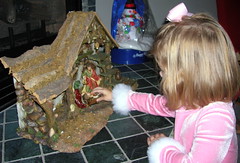
A House


A House
Originally uploaded by auntjojo

I can't believe I forgot to post last night. I took several pictures throughout the day. Knew what I was going to write about. But when I got home from teaching I simply forgot. I am so sorry. I have learned, however, that when I am in the middle of a discipline, the best thing to do when I have messed up is to just keep going. Don't dwell on the mistake. The point is to develop a habit. So, here is yesterday's post.

The Psalmist this week cries out, "One thing I ask of the Lord, this is what I seek: that I may dwell in the house of the Lord all the days of my life." (Ps. 27.4). The temple is a place of beauty, safety, and justice. I have always loved this imagery and the idea of being a simple doorkeeper in the house of the Lord. To be honest, for me the image held the possibility of escape from the troubles and responsibilities of this world. Yesterday, however, I was led to reflect on the fact that we are now the houses of the Lord. Our bodies are God's temple and the Holy Spirit dwells within us. It is in our bodies that we are to find beauty (the image of God?), safety (a healthy self-image?), and justice (freedom in Christ?). For God has made a home there. Rather than fleeing ourselves, we are to embrace God's presence within us. The disciplines of Lent are not about escaping our bodies, but about freeing them from the unhealthy sinful practices that ensnare us body, mind, and soul, so that we can live into the full freedom that comes from the presence of the Holy Spirit in our lives.

(On a side note, many of my thoughts on this journey are coming from Jurgen Moltmann's The Spirit of Life, the text for the theology course I am currently teaching.)

Wednesday, February 24, 2010

Citizenship


Citizenship
Originally uploaded by auntjojo

In Philippians 3.19-20, Paul contrasts those whose minds are on earthly things with those whose citizenship is in heaven. It seems that Paul is telling us that as Christians we are to look up to heaven and away from this earth. We are to live in the spiritual realm rather than in the reality of this world. And yet vs. 21 promises not that we will be released from this world and these bodies, but that these bodies of ours will be transformed, made like God's glorious body. Citizenship in heaven is not an escape from this world, but rather a transforming of this world into God's likeness. Lent can be a time when we try to flee this world. We deny ourselves. We withdraw into a season of inward repentance and reflection. While these are important aspects of Lent. They are not meant to be an escape. Rather they are meant to free us so that we can live our heavenly citizenship in this world. We are to bring the kingdom into the here and now. How can we live more fully as citizens of heaven during this Lenten season?

Tuesday, February 23, 2010

Chickens


Chickens
Originally uploaded by auntjojo

"O Jerusalem, Jerusalem... how often I have longed to gather your children together, as a hen gathers her chicks under her wings!" Jesus' lament in Luke 13.34 resembles a mother crying out over her rebellious children. God as our mother reaching out in love and care, yet facing rejection and eventual death at the very hands of the one's she is gathering under her wings. The redemption offered to human beings by Christ is both the bearing of our sins and walking alongside us in our suffering. Though Christ seems to become more and more isolated on his journey to Jerusalem, in reality he is drawing ever closer to us. Solidarity with the suffering, but also a fierce clinging to the perpetrators. A willingness to remain in relationship and offer redemption to those who chose to turn their lives back towards God. A willingness to remain in relationship despite the depth of pain and sorrow it causes. Are we willing to do the same? To cling to those who hurt us in love? To return to those we have hurt and seek forgiveness? Not in weakness, but in a strength that holds on to our own integrity, in a truth that names the reality.

Monday, February 22, 2010

A Light in the Darkness


A Light in the Darkness
Originally uploaded by auntjojo

Standing in a dark room before a mirror, I aim the camera and shoot. Light flashes. For a moment the room is illuminated. You have no idea what will appear in the picture at the moment you take the shot. Yet the brief instance of life reveals a way forward.
The psalm for this week begins, "The Lord is might light and my salvation. Whom shall I fear?" (Ps. 27.1) The Old Testament passage tells the story of Abraham. God has just made a mighty promise, yet Abraham is still in the dark. He cannot see a way forward. He cannot fathom how God might fulfill this promise. And so, in a vision, God goes before him as a burning pot and a flaming torch... a light in the darkness. Hope in the midst of despair.
At the beginning of Lent, we stand with Christ at the beginning of a dark journey. We know that redemption is at hand, but there seems to be no way forward. At least no way that avoids the deep darkness of the cross. There are flashes of light. Miraculous healings. Exorcisms. The Transfiguration. Moments when the light of heaven flashes into this world and points a way forward. There are promises of the past, such as the fulfillment of God's covenant with Abraham, which leave a lingering light which point the way.
As we begin Lent, however, we must allow ourselves to enter the darkness. Though we live in the light of the resurrection, we must let ourselves walk through the night of Christ's suffering.

Sunday, February 21, 2010

Foundation Stones


Foundation Stones
Originally uploaded by auntjojo

Along the top of an old stone bridge crossing a stream down a winding road in Pennsylvania is a cornerstone carved with the names of important people who helped lay the foundation.
What if the owner of the bridge suddenly added new stones? Building on top of what already existed? How might we feel about these new stones? Would we consider them a part of the bridge?
Perhaps this is a bit of a stretch illustration wise, but I see a connection to today's text from Romans 10:12-13 where Paul reminds us that everyone who calls upon the name of the Lord will be saved. There will be no difference between Jews and Gentiles. The "same Lord is Lord of all and richly blesses all who call on the Lord." Old and new will come together through faith in Christ by the power of the Holy Spirit.
Paul's words challenge us to broaden our understanding of who belongs to the body of Christ. It is not just those who are new and vibrant. It is not just those who follow the ancient traditions. Rather, all who believe in the Lord are saved. During the Lenten journey, we can become protective of our faith. We recognize the depth of the struggle. We recognize the overwhelming sacrifice. And yet Christ himself; Christ who faced persecution, rejection and death; Christ who had every right to close the gate behind him, to limit salvation to only the most faithful; Christ throws his arms wide open to offer salvation to all who call upon his name. And we must have the faith and courage to do the same.

Saturday, February 20, 2010

Stumbling to Jerusalem


Foot Against the Stone
Originally uploaded by auntjojo

Psalm 91 promises that the angels will attend to those who trust in God. You "will not strike your foot against a stone." The Lord is our refuge. We can rest in the shadow of the almighty. For any of us who have suffered or come to harm, what do these promises mean?
Satan throws this verse in Jesus' face. "Jump off this mountain top. The angels will attend to you." Jesus does not deny God's promise, but refuses to test God. And continues to walk forward towards Jerusalem and the cross. A place where the angels seem utterly absent.
In Lent, we are not reminded of God's protection. Not in the traditional sense. Rather, we are reminded that God walks with us in our suffering. Jesus stumbles and falls on the way to the cross. And Lent calls us to stumble along with him. The Christian journey is not always easy. As we mature in our faith, our lives grow in direct contradiction to the sinful structures of this world. We, too, march towards Jerusalem.

Friday, February 19, 2010

God is Our Refuge


God is Our Refuge
Originally uploaded by auntjojo

It is only the third day of Lent and already I must decide what this discipline means to me. Up early, traveling across country. A day with friends. Up late, prepping for class next week. Does it matter if I stay faithful? Does it really matter if I post a picture each day? It seems in this journey of life there are various stages when we are most vulnerable to temptation. And the beginnings are often the most difficult. Jesus himself, when called to ministry, immediately is sent into the wilderness to face temptation. Satan doesn't tempt him with lies. He tempts him with the truth, the very words of Scripture. "Jump off this cliff. God promises to rescue you!" I could come up with a dozen scripture verses that would justify stopping these devotions right now, but I choose, at least this night, to go on. We are vulnerable whenever we begin a new discipline, because it has not yet become a habit. It has not become ingrained in our body and mind. It requires daily compulsion. A daily act of the will. And that is part of the purpose of Lent. To develop spiritual practices that will become ingrained in our being. To move our faith from our mind deep into
our heart, written there by the Spirit.

The picture above resembles a cross, but in reality it is the mast of a ship. Perhaps developing spiritual practices allows us to put down our oars and hoist a sail... a sail that allows the breath of the Holy Spirit to propel us effortless across the sea.

Thursday, February 18, 2010

First Fruits


First Fruits
Originally uploaded by auntjojo

My first fruits these days seem pretty meager. Paychecks are few and far between. I am exhausted running from one job to another. My spiritual life is struggling and my attitude is often pretty lousy. What does it mean to bring an offering to God not out of abundance, but out of lack? Will God accept what little I have?
The practice of giving our first fruits to God (Deut. 26:1-11) began when God brought Israel up out of the Egypt into the land flowing with milk and honey. But what happens when you are still in the wilderness? Grumbling along with all the others about having to eat manna for dinner again?
I think, in the midst of wilderness wanderings, perhaps we are still called to offer our first fruits, even if they are quite sparse. It is not that God needs what we have to offer, but that in giving we let go for a moment of our fear and need. For one second, we forget about ourselves and remember that we are not alone. God is with us.

Wednesday, February 17, 2010

Cleanse Me From My Sin


Cleanse Me From My Sin
Originally uploaded by auntjojo

Theme of dirty and clean pervades the scriptures this day and the Ash Wednesday celebrations. We wear ashes as a reminder of our own mortality and sinfulness. We cry out to be cleansed from our sin (Ps. 51). And we are reminded to wash our face when fasting so as not to parade our piety in front of others (Matt 6.16ff), reminding us that we are not as clean as we think!
Deep down, however, the texts remind us that we are created in the image of God. At our core, we are meant to be clean and free of dirt and sin. We are good. Our bodies are good. They don't need to be punished during Lent. They need to be cleansed. May we have the courage to present our bodies to be washed whiter than snow throughout this Lenten season.

Thursday, December 24, 2009

Placed in A Manger


Placed in A Manger
Originally uploaded by auntjojo

"And she gave birth to her firstborn, a son. She wrapped him in cloths and placed him in a manger, because there was no room for them in the inn."
Luke 2:7

Mary and Joseph arrived in Bethlehem. Elizabeth had been filled with the Holy Spirit. The baby John had leaped for joy. They were the exception. Most people had no idea what was taking place. Certainly the innkeeper was unaware. God... so unpredictable. Sometimes arriving with pomp and circumstance. Sometimes sneaking in under the radar. Is there anything we can do so that we'll be leaping for joy rather than sending Jesus out to the barn? Will we leap for joy on Christmas Day? Or will Jesus be lost amidst the presents, the family drama, the food, and Santa Claus? May our hearts be prepared for the baby Jesus to be laid in the mangers of our hearts once again on Christmas Day.

Wednesday, December 23, 2009

The Time Came


The Time Came
Originally uploaded by auntjojo

"He went there to register with Mary who was pledged to be married to him and was expecting a child. While they were there the time came for the baby to be born."
Luke 2:5-6

I am sure this is not the way Mary pictured it. Expecting a child did not mean expecting to ride for days on a donkey, leaving behind family and friends, delivering in a stable. Many of us have expectations at Christmas. And few Christmases live up to our expectations. Was Mary doubting when she gave birth? Certainly this was not how the Son of God should be brought into the world. Maybe she had got it all wrong? But hope was coming... a sign from God... an assurance that God's plans were still being fulfilled. But for tonight she would live with the doubt. May we have courage to wait through the doubt, seeking the light of that one star that might show us the way to hope.

Tuesday, December 22, 2009

Everyone Went to Their Own Town


Everyone Went to Their Own Town
Originally uploaded by auntjojo

"And everyone went to their own town to register. So Joseph also went up from the town of Nazareth in Galilee to Judea, to Bethlehem, the town of David, because he belonged to the house and line of David."
Luke 2: 3-4

It seems in some way that many of us recreate Joseph and Mary's journey to Bethlehem during Advent. We make our way home, to friends and family, weathering dangerous road conditions and flight delays. What does going home mean for you? Does it seem to resemble the hardships Mary faced? Does it seem like a rule that must be followed? Does it mark your identity, for good or bad? What does the journey home mean for you? And what place do you make in your lives for those who don't have a home to go to? How does the church reflect the fact that we are now, by virtue of our faith, all a part of the lineage of David? We are all part of the family?

Monday, December 21, 2009

Registration


Registration
Originally uploaded by auntjojo

"In those days a decree went out from Emperor Augustus that all the world should be registered. This was the first registration and was taken while Quirinius was governor of Syria."
Luke 2:1-2

All the world should be registered... The Emperor trying to measure the size of his empire. How often do I count things in order to measure my worth? My savings account? My facebook friends? My weight? The size of my house? How many Christmas presents I received? Christmas reminds me that my true worth is measured by the sacrifice of a God who was incarnated in human form and gave, even unto death, for our behalf. Now, if I could just live into that.

Sunday, December 20, 2009

Surely...


Surely...
Originally uploaded by auntjojo

"for God has looked with favor on the lowliness of this servant. Surely, from now on all generations will call me blessed."
Luke 1:48

To be honest, I didn't really want to take a picture today. I have pretty mixed feelings about Mary. This morning the sermon was filled with illustrations from the experience of pregnancy and the struggles of semi-perfect families. I realize they are good illustrations. The goal was to bring some realism to the Christmas story. I was just tired. Tired of mourning my own singleness and lack of children. Tired of struggling with loneliness. Tired of the church pretending we all have intact families and failing to create new families to fill in the gaps.

Sorry, this is not much of a Christmas reflection. But I was wondering if perhaps Mary was a bit tired at this point. So much was changing for her and she had no idea what the future would hold. I was wondering if the Magnificat, the verses for today, were not some nice sweet song of Mary, but a shout of courage. In the midst of a life she no longer understood, Mary speaks forth what she knows about God, a God of justice, power, compassion, and mercy. Sometimes that is all the light there is at Christmas. That small glimmer of hope as we state again what we believer, as we stand defiant in the face of a world that we no longer understand.

Saturday, December 19, 2009

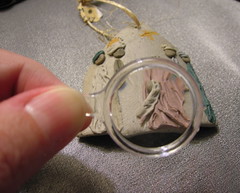
Magnifies


Magnifies
Originally uploaded by auntjojo

"And Mary said, 'My soul magnifies the Lord, and my spirit rejoices in God my Savior.'"
Luke 1:46-47

When people look at me, what do they see? When they look into my soul, what do they find? Do I magnify the Lord? When they look at my church, at the soul of my congregation, does God seem bigger? When the world looks at Christians, is it easier to see the face of Jesus? Or do we, instead of magnifying God for those around us, make things blurry and confusing?

Friday, December 18, 2009

Fulfillment


Fulfillment
Originally uploaded by auntjojo

"And blessed is she who believed that there would be a fulfillment of what was spoken to her by the Lord."
Luke 1:45

A friend gave me a handmade bowl for Christmas and a basket full of foods for use in the bowl. Though bowl is beautiful, but in order to fulfill its purpose, it must be used.
The word of God is meant to be fulfilled. They are not empty words or just ideas to consider. The word of God was meant to reveal God's plan for the world, a plan that God has promised to bring to fulfillment, a plan that began with a little baby in a manger. Honestly, many days I think that somehow things have gotten off track. But I must believe that somehow they word of God will be fulfilled. God promised.

Thursday, December 17, 2009

Leaping for Joy


Leaping for Joy
Originally uploaded by auntjojo

Odd things happen when you embark on a spiritual discipline such as this Advent devotional. Who would have thought that Van Halen singing "Jump" would bring to mind the image of the baby John leaping in Elizabeth's womb? Followed by "Owner of A Lonely Heart" by Yes causing me to reflect on the life of John wandering in the wilderness. But then "Jungle Love" came on and the moment of reverie was gone. Of course, this may reveal more about my musical tastes than my devotional life! But I digress... on to today's devotion.

"For as soon as I heard the sound of your greeting, the child in my womb leaped for joy."
Luke 1:44

Who were the first to witness to the coming messiah? It wasn't the shepherds or the wise men. It was Elizabeth and John... John, still a baby in her womb. A child in a womb leaping for joy at the presence of the coming Messiah. What happens when a pregnant woman is present during a worship service? Or hears her family pray? What is occurring the hearts and minds of the babies squirming, sleeping, and crying among us on Sunday mornings? Babies sense God's presence. May that shape our worship and the waiting of all those who are expecting to give birth in the coming months.

Wednesday, December 16, 2009

Blessed


Blessed
Originally uploaded by auntjojo

"... Blessed are you among women, and blessed is the fruit of your womb."
Luke 1:42

A halo to mark the blessedness of Mary. I have often struggled with what it means to be blessed. I recognized that I am quite blessed in my life. Unfortunately, God rarely seems to bless me with the things that I would choose or that I desire. Perhaps my understanding of the word blessing is a bit off. I seem to think of being blessed as having all my wishes and desires fulfilled, but in reality, to be blessed is to be chosen by God, to be used for God's purposes in the world and that often involves sacrifice. Dare I pray that we all might be blessed this Advent season?

Tuesday, December 15, 2009

The Holy Spirit


The Holy Spirit
Originally uploaded by auntjojo

"When Elizabeth heard Mary's greeting, the child leaped in her womb. And Elizabeth was filled with the Holy Spirit and exclaimed with a loud cry, 'Blessed are you among women, and blessed is the fruit of your womb."
Luke 1:41-42

I tried to take a picture of the Holy Spirit today. I realize most pictures are of pretty white doves, but this seemed more appropriate. A shadow, hot and fiery, fleeting. It scares me a bit to think of being filled with the Spirit. You never know when the Spirit might cry out, proclaim, pronounce blessing on things we cannot understand. You never know when the Spirit might recognize God in another human being even when we are too blind to see.

Monday, December 14, 2009

Where She Entered


Where She Entered
Originally uploaded by auntjojo

"... where she entered the house of Zechariah and greeted Elizabeth. When Elizabeth heard Mary's greeting, the child leaped in her womb. And Elizabeth was filled with the Holy Spirit..."
Luke 1:40-41

Have you ever tried to greet someone only to have them ignore you or seem annoyed that you interrupted their busy schedule? Or tried to greet someone you weren't sure would be happy to see you? I wonder what Mary expected when she greeted Elizabeth. Did she expect a warm reception? Or was she afraid that Elizabeth would reject her, turn her away as a young, unmarried, pregnant woman who dared to show up at her home, the home of the priest Zechariah. She need not have worried. God knew that Mary was scared and alone, in need of a friend. And God was present as she entered Elizabeth's home. The child in Elizabeth's womb leaped for joy and she herself was filled with the Holy Spirit.

Sunday, December 13, 2009

Make Haste


Make Haste
Originally uploaded by auntjojo

"In those days Mary set out and went with haste to a Judean town in the hill country."
Luke 1:39

A young girl has just found out that she is pregnant... by God. She sets out in haste. Was she fleeing her family? Did she go alone? Was the journey difficult?
Where would you go in such a situation? Who could you turn to if God did something so unexpected and confusing in your life? Would someone be able to turn to you? I suppose that is a more important question. For God seems to act in extraordinary ways in the lives of young people. And so often we are unwilling to see and hear. We don't want our comfortable lives challenged by their passion and fearlessness. If Mary shows up at your door this Christmas, will you let her in?

Saturday, December 12, 2009

Waiting and Hoping


Waiting and Hoping
Originally uploaded by auntjojo

I've decided to allow myself a little freedom on Saturdays to stray from the text and move towards more general Advent reflections.

Advent can be a very painful season for those of us who have long awaited children for a variety of reasons. Maybe we have been infertile. Maybe we have had miscarriages. Maybe we have ended up single far longer than we intended. For some of us, Advent reminds us not of the birth of something new, but the death of a dream or a prayer unfulfilled. Advent requires a faith and hope that are at times beyond what we can bear. During this Christmas season, looks for those who are without hope. Look for those who are struggling with unbelief. And come alongside them, just as Christ came alongside us, God incarnate, Immanuel.

Friday, December 11, 2009

Not Worthy


Not Worthy
Originally uploaded by auntjojo

"I baptize you with water; but one who is more powerful than I is coming; I am not worthy to untie the thong of his sandals."
Luke 3:16

Our Advent text this week has focused again on the ministry of John the Baptist. I am always amazed at his ability to set aside his own ego for the ministry he was called to. It is not an easy thing to do... something that most of us, particularly pastors, struggle with on a regular basis. Advent is a time to reflect on our own worthiness. It highlights how unworthy we are in light of the one who is to come. And yet, it also shows that we are creatures of tremendous worth. God sends God's son into the world on our behalf. A worth not of our own, but a gift given to us by our God.

Thursday, December 10, 2009

Soldiers...


Soldiers...
Originally uploaded by auntjojo

"Even tax collectors came to be baptized, and they asked him, 'Teacher, what should we do?' He said to them, 'Collect no more than the amount prescribed for you.' Soldiers also asked him, 'And we, what should we do?' He said to them, 'Do not extort money from anyone by threats or false accusation, and be satisfied with you wages.'"
Luke 3:12-14

First, we are to give away our possessions. Then, commands about money. Don't take advantage of people in your job. Don't take more than you are supposed to. Don't use your position for your own advantage. And don't demand too much pay. We don't talk about these kind of things too much in the church. How do we follow Christ in our workplaces? Whether we are tax collectors or soldiers, corporate CEO's or police officers, God wants to have some say about our wealth, or our lack of it. How are you using your money during this Advent season? Is it honoring to the one we are waiting for?

Wednesday, December 09, 2009

Share One


Share One
Originally uploaded by auntjojo

"And the crowds asked him, 'What then should we do?' In reply he said to them, 'Whoever has two coats must share with anyone who has none; and whoever has food must do likewise.'"
Luke 3:10-11

I have to admit it. I like to get presents. I like to give presents as well, but I really like to get them. And I get a bit resentful at Christmas. With no nuclear family of my own and no work family, I am in very few gift-giving circles this year. So now, not only do I want presents, I want a spouse, children, and a job as well. Somehow, I begin to equate receiving gifts with begin valued, thought of, cared for. Forgive me. I know that just the opposite should be true. Christmas is about receiving the greatest gift of all, the one that should make us feel so loved that we want to give away all we have, share with others, make sure they are clothed and fed, that they feel the love that we are assured of. Help me to remember that this Christmas season. Help me to actually believe that it is better to give than to receive.

Tuesday, December 08, 2009

Will They Bear Fruit?


Will They Bear Fruit?
Originally uploaded by auntjojo

"Even now the ax is lying at the root of the trees; every tree therefore that does not hear bear good fruit is cut down and thrown into the fire."
Luke 3:9

I can't pass up an excuse to take a picture of trees. I find trees in winter extremely beautiful. All the leaves stripped away. Just the barren structure of the branches reaching out and up. These trees will bear fruit again in the Spring. That is what they were made to do. That is what we were made to do. We may go through barren seasons, winters of our lives when we are stripped bare once again, but we are made to bear fruit. For some, Advent is just such a season of waiting, a season to be stripped bare, a season of dormancy, waiting again for the shoot of Jesse to spring forth. For those in such a season, may you know that God is walking closely with you.

Monday, December 07, 2009

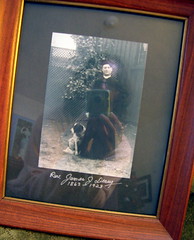
We Have As Our Ancestors...


We Have As Our Ancestors...
Originally uploaded by auntjojo

"Bear fruits worthy of repentance. Do not begin to say to yourselves, 'We have Abraham as our ancestor': for I tell you, God is able from these stones to raise up children to Abraham."
Luke 3:8

I have Rev. James J. Deasy as my ancestor, a Catholic priest at the turn of the 20th century. My grandmother faithfully went to mass every Saturday evening at 5:00 pm until she died. There is a history of faith in our family, but it almost didn't make it to the next generation. Faith does not automatically pass itself on. it takes work and commitment. John seems to be chastising the people for relying on the faith of their ancestors. They were no longer living out their faith, but living it in name only. It seems like an apt message for toay... for the many churches that seem more concerned about caring for themselves and fail to pass on their faith to their children or to anyone else. I am so grateful for those who chose to pass their faith on to me when I was in high school. Thank you for bearing fruit!

Sunday, December 06, 2009

Who Pulled the Alarm?


Who Pulled the Alarm?
Originally uploaded by auntjojo

So, the verses in the lectionary this year leave us with some difficult verses to start the Advent season. The gospel lesson this week continues with John's preaching in Luke 3.

"John said to the crowds that came out to be baptized by him, 'You brood of vipers! Who warned you to flee from the wrath to come?'"
Luke 3:7

Who warned you? Who pulled the alarm? Do you know what you are getting yourself into? I have to admit that in a way I am grateful I didn't know what I was getting myself into when I came to faith in high school. Had I known how difficult the journey would be, I am not sure I would have made the same choice. Following Christ is not easy. John knew that. He was not preaching some easy message of faith, but a powerful message of repentance and a call to discipleship. A message that would lead the followers not into a nice Sunday morning worship service, but to a cross. Our Advent waiting should be filled with joyful anticipation, but also with a bit of fear and trembling of what is to come. Jesus is the way, the truth, and the life... but just because it is true doesn't make it simple.

Saturday, December 05, 2009

Time and Light


Time and Light
Originally uploaded by auntjojo

Advent is marked by light and time. A candle lit each week. A star burning brightly to mark the moment and lead the way. The coming of light into the darkness and a new beginning... the year one.

It seems that during this Advent season I need to figure out how to better structure my time around the light. Our to somehow reorder my understanding of time so that it is not governed by this world but rather is governed by my anticipation of the next. This seems all the more important in a season that is driven by the number of shopping days left until Christmas!

Friday, December 04, 2009

Why Can't I See Clearly?


Why Can't I See Clearly?
Originally uploaded by auntjojo

"and all flesh shall see the salvation of God..."
Luke 3:6

The promises of Isaiah as proclaimed by John seem so easy. The Lord will come and all flesh shall see the salvation of God. Everything will become clear. All nations and tongues will confess. And yet here I am once again struggling to understand. I am writing the last pages of my dissertation and things seem even more complicated than when I began. I suppose that was always a part of John's message. Perhaps, like John we need to wander occasionally into the wilderness of despair and confusion to hear afresh the words of God.

Thursday, December 03, 2009

Every Valley Shall Be Filled


Every Valley Shall Be Filled
Originally uploaded by auntjojo

"Every valley shall be filled, and every mountain and hill shall be made low, and the crooked shall be made straight, and the rough ways made smooth..."
Luke 3:5

I have always wondered why anyone would need to straighten the Lord's path or fill in valleys (or for those in Chicago, the potholes!). I kind of think of God as an all-utility vehicle. I realized, however, that the focus of the passage is not on God, but on me. What are the sharp bends in the road of my life? The valleys that need to be filled? The hills that need to be made low? During this season of my life, I struggle with jealousy, with fear that the Lord will not provide, trusting God in the midst of unanswered prayers. These are the things that keep the road to my heart from being smooth and open to God. How can I prepare the way to my heart this Advent season?

Wednesday, December 02, 2009

Preparing


Preparing
Originally uploaded by auntjojo

"... as it is written in the book of the words of the prophet Isaiah, 'The voice of one crying out in the wilderness: Prepare the way of the Lord, make the Lord's paths straight."
Luke 3:4

I pulled out the Christmas decorations today. I am not sure this is the kind of preparation that John was talking about as he cried out in the wilderness. I realize that my preparation is tinged with commercialism, and yet there is also something deeper about it all. An attempt to recapture something from my childhood. That sense of awe and wonder, of anticipation and excitement. There is something in the Bible about that, I think... becoming like a child.

Tuesday, December 01, 2009

Baptisms


Baptisms
Originally uploaded by auntjojo

"He went into all the region around the Jordan, proclaiming a baptism of repentance for the forgiveness of sins."
Luke 3:3

The church I am currently attending practices infant baptism. In some ways, it seems like a tame alternative to John's baptism of repentance in the Jordan River. Yet, water is rarely tame... even the smallest drops over time can wear away even the strongest of rock, can cause metal to rust, can wash away a hillside. Baptism, whether of an adult or infant, is never a tame act. It confirms a radical promise made by God, one that has the power to change lives. And it reminds us of the power of little things... a drop of water, a baby in a manger, the faith of a child. May the faith of the children around us erode away our jagged edges this Advent season, breaking through our hard shells, and preparing our hearts for the coming of the Christ child.

Monday, November 30, 2009

A History of Faith


A History of Faith
Originally uploaded by auntjojo

"In the fifteenth year of the reign of Tiberius Ceasar -- when Pontius Pilate was governor of Judea, Herod tetrarch of Galilee, his brother Philip tetrarch of Iturea and Traconitis, and Lysanias tetrarch of Abilene-- during the high priesthood of Annas and Caiaphas, the word of God came to John son of Zechariah in the desert."
Luke 3:1-2

History... often an interpretation by those in power of events taking place in the world. But into this mix, Luke interjects John, the son of Zechariah, a man wandering the wilderness. To the list of significant names, God adds one who was not powerful, but faithful. Over and over again, God attempts to reorder the history of humanity around faith, not power... And over and over again we revert once again to our sinful nature. During this Advent season, may we try once again to reorder our world not around power, but around faithfulness. May we strive to be faithful. May we seek those who are faithful. May we rewrite history around the faithful, around those to whom God speaks in the wilderness.

Sunday, November 29, 2009

Fermentation Not Dissipation


Today marks the first day of Advent and the launching of my second photo devotional. Once again, I will be using my photography as a spiritual discipline throughout the season posting a photo each day reflecting on the upcoming week's lectionary text. I hope that you will be challenged and encouraged throughout the season. And thank you... knowing that many of you will be joining me on this journey is the accountability I need to stay focused on this process throughout an otherwise very busy season!

Several others will be joining me in the process and their photos will be posted on Flickr in the group Advent 2009. If you are interesting in taking part, let me know and we'll add you to the group.

And so... we proceed to Advent, Day 1, November 29, 2009.

"Be on guard so that your hearts are not are not weighed down with dissipation and drunkenness and the worries of this life, and that day catch you unexpectedly, like a trap..."
Luke 21:34-35

I had to look up the word "dissipate." Apparently, not only does it mean to disperse and dissolve, it also means to over indulge in sensual living, especially in relation to alcohol. The text for this week (Luke 21:25-36) ends with a warning about dissipating as we await the return of Christ. This seems to be especially true during the season of Advent. Rather than indulging in excessive celebrating and spending during the holidays, this is to be a time of fermentation, not dissipation. It is a time to wait, to rest, to age... to prepare.

Tuesday, October 06, 2009

Prayers of the Church

This past Sunday our youth pastor, Matt Kennedy, preached a very fine sermon on Job. Personal, biblical, clear but not simple. I had the privilege of leading worship with him and to offer the "Prayers of the Church." I realized that I love to pray on behalf of the church. I am not always quick to offer prayer when I am meeting with individuals. I think prayer for me has a deep intimacy attached to it that I am not always willing to enter into one on one. I also generally struggle in my own personal prayer life. Answers usually don't come quickly. Comfort is not always present. And it is not always comfortable to lay yourself bare before God.

But for some reason, leading prayer is something I love. Perhaps it has to do with the fact that leading "prayers for the church" was one of the first pastoral acts I was asked to perform when I was an intern. Each month the staff and interns would meet with the pastor to plan Sunday morning worship and often we were asked to read scripture or lead the prayers of the church. Perhaps it has to with the fact that leading "prayers of the church" was one of the few ways I could exercise my pastoral gifts when I was serving as a Minister of Christian Education. As a woman I was not allowed to preach or lead the sacraments, but I was allowed to pray... from the pulpit... during Sunday worship.
And so, today, I offer that prayer to all of you.

Prayers of the Church
North Park Covenant Church, October 4, 2009
Gracious and Loving God… we come before you this morning.
For some those words… gracious and loving God… flow easily from our lips. Our hearts are full of praise and celebration. We rest secure in the knowledge of your presence and your care in our lives. For such faith and confidence, we give you thanks.

For some, those words… gracious and loving God… are acts of faith this day. We thank you for the foundation of faith that you have laid in our lives through the work of your Holy Spirit, through our families through this congregation. We thank you for the person and work of Jesus, for the words of Scripture, for the communion of saints, for all those things that make it possible to believe that you are a gracious and loving God even when circumstances are trying, even when there is pain and suffering, even when we have doubts.

We give thanks this day for those who work full-time to laying that foundation of faith in our lives and the lives of those around the world thinking especially of our missionaries, David and Gwendolyn Mark.

For some, those words… gracious and loving God… are almost impossible this day. May we rest in the knowledge that God welcomes our tough question, that God is bigger than all of our doubts and fears. That God hears the brokenhearted. And may we allow others to have faith for us this day. May we rest in their faith as they walk alongside us.

This day we lift up a number of people in our congregation who seem to be in “Job-like” seasons in their lives. We think of Lucille Anderson and her family, Roy and Helen Olson, and the parents of John Coomes. Make your presence known in these families. Bring healing. Bring hope.
And we think especially this morning of those individuals, so many of them women and children, who live “Job-like” existences because of the presence of domestic violence in their homes. Be with ministries like Wellspring and give us eyes to see where such pain exists and courage to respond.

Bring healing to those who are ill. Bring comfort to those who mourn. Bring hope to those who are hopeless.

We gather together this day with all the saints around the world, all who are gathered around your table this morning, offering our concerns, offering our praise, offering our thanksgiving, and offering together the prayer that you, our friend and brother, taught your disciples to pray saying:

Our Father, who art in heaven
Hallowed by thy name.
Thy kingdom come, thy will be done
On earth as it is in heaven.
Give us this day our daily bread,
And forgive us our sins as we forgive those who sin against us,
And lead us not into temptation,
but deliver us from evil.
For thine is the kingdom, and the power
and the glory forever. Amen.

Monday, June 29, 2009

Gender and Work: The Case of the Clergy

In 1993, Ed Lehman published a sociological study entitled Gender and Work: The Case of the Clergy. Lehman’s research focused on whether male and female clergy had different approaches to pastoral ministry. Lehman’s work was a response to the assertion by cultural feminists that women were inherently different in their leadership styles and understanding of pastoral ministry than men. He used the cultural feminists definitions of male and female styles of leadership to frame his research questions. Lehman’s study focused on approximately 500 clergy from 4 primarily white mainline denominations in the United States. The sample was comprised of half male and half female clergy with about 20% of the sample representing non-white ethnic groups. His primary research method was a phone survey to clergy. In addition, surveys were mailed to laity in a number of congregations to see if clergy self-perceptions were similar to that of laity perceptions.
Lehman’s work did not produce very clear results. Differences were often minimal and rarely located along lines of gender. While Lehman did find that female clergy are slightly more empowering than male clergy and tend to lead with rather than lead over, he found that both male and female clergy tend to use more feminine approaches to leadership. In addition, both male and female clergy were incredibly varied in their approaches. Lehman’s work highlighted the complexity of the issue of leadership. Unfortunately, his work is often cited as proof that women lead differently than men using a more empowering and relational approach. Lehman would most likely not support this assertion. Instead, he would shift the question from whether male and female clergy approached pastoral ministry differently and begin asking under what conditions gender differences emerged.
Lehman found the clearest differences among clergy of large congregations. He found that female senior pastors with multiple staff members often led in more feminine ways while male clergy in the same positions led in more masculine ways. He suggests that these female clergy had more freedom to express their true style of leadership while those in smaller congregations were more limited to cultural expectations of male roles. This has been one of the more challenged findings in his work. Zikmund, Lummis and Chang in their work Clergy Women found few differences between male and female clergy in large congregations. At the moment, it is difficult to find a large enough sample of female senior pastors in large congregations to come up with any definitive themes or conclusions. What is interesting is that Lehman’s work challenges stereotypes that suggest that women must lead like men in order to move ahead and be successful in ministry. If what Lehman suggests is true, I have wondered if these women lead in ways that are more acceptable to the culture. By not challenging gender roles, they are seen as “safer” and less threatening even though as pastors of large churches they occupy positions of power. Must you be a certain type of woman leader to get ahead? It seems that further research in this area would be helpful.
Lehman also found differences among those right out of seminary and more veteran pastors. New pastors tended to exert more power over the congregation while veteran pastors were more empowering. This perhaps suggests that new pastors are trying to establish their authority or that seminaries are training them in more masculine styles of leadership. Lehman also found more differences between white clergy and African American clergy, both male and female, than between male and female clergy of either race. African American clergy as a whole were less empowering and more likely to exert power over the congregation. Lehman does not expand much further on either of these results, suggesting that further research would be helpful. In particular, Lehman’s results suggest that the cultural context in which pastoral identity is formed would be an important site for further research. This includes seminaries, the congregations that form pastors, and other significant forces such as race and class. One of the aims of my research is to include these variables more explicitly in my work.
Lehman's work is clearly difficult to interpret, but it provides a good starting point for discussions regarding gender and pastoral leadership. Whether you agree or disagree with his results, they are worthy of being engaged and discussed. Where have your experiences supported his findings? Where do they contradict what he has said? The next post will consider some additional studies on women clergy that build on Lehamn's work.

Tuesday, June 09, 2009

Mission and Liberation in Four Ecclesiologies

My last post gave a very brief overview of the ecclesiologies of Boff, Ruether, Volf, and Russell. This post will provide some critique of their works focusing on the practical implications of their theologies for the church.

For Boff and Ruether, liberation is an essential aspect of the gospel, though defined with different emphases. For Volf, new life is essential. There is a liberation aspect, but Volf sees justice as a culturally constructed reality. He is unwilling to make universal statements about what is just. Unfortunately, in failing to do so, he often loses any liberating edge in his work. Gutiérrez describes two separate approaches to ecclesiology: the new Christendom model and the distinction of planes model. The new Christendom model centers on the work of the church in creating a just society in this world. The distinction of planes model sees a radical disjunction between the church and world. While Volf would argue for a culturally sensitive and critical gospel, he is also seeking to reclaim a gospel that is above the influence of the culture. His ecclesiology focuses on this aspect of the gospel while failing to provide significant tools to help congregations construct meanings that are socially located. As such, it often becomes unreflective on how the gospel itself has been culturally constructed.

Russell’s eschatological vision of the church contains aspects significant to all of the others. Along with Boff and Ruether, her work has a liberating emphasis focusing on both economic issues and issues of gender. Her work Church in the Round argues that the church can only be understood through the eyes of the poor and oppressed. The round table serves as the central image of her church where are all gathered equally around the table. There are no margins, or rather everyone is at the margins and Christ is at the center. The table itself draws on the eschatological image of the banquet table where Christ serves as the host and all nations and tongues are gathered for fellowship and worship. All are to be welcomed to the table and hospitality serves as a central image. This hospitality is not to simply welcome people into the church. Instead, the church is to take that hospitality out into the world, bringing liberation and fighting against injustice. At times, Russell fails to analyze the power dynamics around the table itself. Her image of hospitality can begin to sound patronizing as those who already have a seat reach out to those less fortunate and bring them into their world. None of the theologians addressed here attend to issues of race and the attendant cultural differences that must be addressed in order to create a church community that is truly welcoming and hospitable.

In addition to a missional focus, eschatology radically shapes the structure of the church for all four theologians. All have a more functional understanding of the pastoral office and an emphasis on the priesthood of all believers. Interestingly, Volf, the Free Church theologian, is less radically egalitarian than the other three theologians. While he emphasizes the priesthood of all believers, he holds to the threefold offices of the church: deacon, elder, and pastor. He says that these offices are not constitutive of the church, but are a socially necessary form of leadership for the church to function in this society. Volf provides no critique of the current internal hierarchies of the church and the way that they serve to marginalize many from leadership. Russell spends significant time on issues of leadership and authority in both Church in the Round and Household of Freedom. She argues for a more egalitarian leadership structure. Leadership is exercised with the congregation rather than over the congregation. She feels that ordination has been irredeemably corrupted by patriarchy and argues for a radical restructuring of the pastoral office. For Boff, the base communities are also radically egalitarian. While the priestly office still exists, his emphasis on the priesthood of all believers leads to a community without alienating structures in which individuals share decision-making, share material goods, and form a deep attachment for one another.

A final short note on the role of scripture in each of the ecclesiologies. For each of the theologians, the Word of God is a significant resource for the community. Volf seems to assume the centrality of the Word rather than argue for it. The others take a more critical approach. Russell sees scripture and the tradition of the church as the primary sources of theology since it is through these sources that Christ is revealed. She does take a critical approach to scripture, seeing it corrupted by patriarchy, and calls on a reading of scripture from the margins. Boff seeks to restructure his community around the axes of Word and laity rather than the current axes of sacrament and clergy operative in the Roman Catholic Church. The base communities themselves were formed around the reading of scriptures and the scriptures are seen as the source of liberation for the church. Ruether is the most critical of the scriptures and Christian tradition. While they are a source for theology, they are just one source. She also draws on the religions of the Ancient Near East and of the Hebrews. Liturgy is central for Ruether and much of her liturgies focus on recontextualizing, liberating, and exorcising various texts from the canon of scripture.

Sunday, May 31, 2009

An Overview of Four Ecclesiologies

While historical approaches to pastoral theology have helped me gain a greater understanding of where the church has come from, some contemporary ecclesiologies have helped to shape my understanding of where the church might be heading. "Ecclesiology" is simply theology that tries to understand what the church is. Three significant theologians writing about ecclesiology are Miraslov Volf, Leonardo Boff, Rosemary Radford Ruether, and Letty Russell. Below is a brief overview of each of their ecclesiologies. The next entry will attempt to compare and contrast the four.

The ecclesiologies of Volf, Boff, Ruether and Russell find their groundings in significantly different contexts. Volf writes from the tradition of the Free Church drawing on the work of John Smyth and the Baptist tradition. He seeks to create an ecclesiology that counters the individualism of most Free Church ecclesiologies while attending to both the person and the individual. He also seeks to create an ecclesiology that is respectable in the world, establishing the Free Church movement as a recognized witness to the gospel. Boff, Ruether, and Russell are not concerned with creating an acceptable theology. Rather, their theologies have been developed as critical responses to the greater church body. Boff writes as a liberation theologian in Latin America critiquing the Roman Catholic Church that has served as the cultural center of his community. His critique emerges out of the irruption of the poor in his country and focuses on the elite capitalist establishment and its relationship to the church. Ruether writes as a Catholic in the United States and emerges out of the women’s movement in this country. Her critique focuses on the patriarchal nature of the church. Both seek to create communities that are set apart in order to renew the larger institution of the church.
Russell writes as a Protestant in the United States. She draws on feminist and liberation theologies to critique patriarchy and create a church that is understood through the eyes of the oppressed and marginalized. To use Volf’s definition, each are striving to create a culturally sensitive, culturally critical social embodiment of the gospel.
Each theologian draws on an eschatological vision to shape their ecclesiology. Volf focuses on the new creation. In the new creation there is a mutual indwelling of the Trinitarian community and the glorified church. The church anticipates this new creation and participates in it through the faith of individual believers within the community. Through faith in Jesus Christ, by the work of the Holy Spirit, individual believers are even now in relationship with the trinity. Since all believers are in relationship to the same trinity, they are also in relationship with one another. This unity in the Spirit is central to his understanding of the church. The church is where Christ is present through faith and through the work of the Spirit in constituting the ecclesial community. Volf’s eschatological emphasis is in part a response to the charge that Free Church ecclesiology is separatist and does not recognize the catholicity of the faith. Volf responds by pushing catholicity into the eschatological realm rather than as a present reality. There are some present aspects. At a minimum, all churches must recognize the legitimacy of all other churches that believe in the gospel. This is part justification and part judgment on the Roman Catholic Church. At a maximum, the church should strive to reflect the eschatological reality where all nations and tongues together confess that Jesus Christ is Lord. For Volf, though, complete unity will not take place until the new creation.
Volf’s eschatology highlights the deficiencies in the historic church that will not be redeemed until the end times. He highlights the spiritual reality over the material reality of the church. As such, his sense of mission in the church often remains at a spiritual level. He critiques those who only emphasize the actions of the gospel arguing that there must be a verbal assent and a cognitive understanding of Christ. Boff, Ruether and Russell also have eschatological frameworks that shape their ecclesiologies, but their eschatological frameworks drives them towards a more materially focused mission seeking to create more just societies in this world.
Ruether draws on the New Testament church in Women-Church to shape her structure of the church. For Ruether, the New Testament church was an eschatological community. It was a charismatic community whose ministry was empowered by the gifting of the Holy Spirit. Perhaps most central for Ruether, the gender relations within the New Testament church were modeled after the eschatological reality rather than on the order of creation. As such, men and women served equally in the early church. It was not until the church began to develop a structure and institutionalize that patriarchy set in and women were pushed out of leadership. Ruether’s ecclesiology focuses on returning to the eschatological structure of the church by creating an egalitarian community that resists patriarchy. While Volf’s new creation is grounded in relationship to the trinity, Ruether’s new creation is a feminist vision of the church in which women are equally valued in the culture. As with Volf, her ecclesiology focuses on the creation of such a community more than on an outward vision. While for Volf, such a community is the church itself, for Ruether such a community is only one aspect of the church. Ruether sees her Women-Church functioning as a renewal movement within the greater church. A separate community is needed for critical distance, but should remain in conversation with the wider institution. The Church, for Ruether, is not made up of individual congregations, but following Catholic ecclesiology, is a single entity. The church consists of the institutional Church as well as spirit-filled communities such as Women-Church whose role is to call the institutional Church back to its New Testament roots.
Boff has a similar understanding of the church in his work Ecclesiogenesis. Perhaps this is due to a similar grounding in Catholic theology. He sees the base communities in Latin America as spirit-filled communities who are to serve as renewal movements within the larger institutional Church. His eschatological vision, though, is slightly different than that of Ruether or Volf. Ruether focuses on liberation through the dismantling of patriarchy. Boff focuses on the dismantling of alienating structures, especially the global capitalism that has oppressed the people of Latin America. The differences between Volf and Boff can be illustrated by their understanding of friendship. For Volf, the church is characterized by “sibling friend” relationships. These sibling friend relationships among the believers are modeled after the relationships among the persons of the trinity. They are characterized by mutuality, equality, and love. For Volf, the focus of the new creation is community and relationship. Here he draws on Moltmann’s understanding of the relational trinity. He differs from his mentor, though, and with Boff, on how those relationships work themselves out in the world. Rather than focusing on relationships with one another, though they are also essential, Boff and Moltmann focus on Christ’s relationship to the world. The image of friendship in liberation theology is that of Christ as the friend of the oppressed, coming alongside the poor and the least of these, bringing new life and liberation from injustice. While Volf focuses on the spiritual unity of the community, Boff and Moltmann focus on demonstrating friendship to the world by working against injustice.

Thursday, May 21, 2009

Luther and the Pastoral Office

Yes, I am back to sharing some of my essays from my doctoral exams from last August. If you remember from March, I have been tracing some of the historical understandings of the pastoral office. This post focuses on the work of Martin Luther. Within my own denomination, Luther's work is extremely significant as if lays the foundation for the structure of the state church that was present in Sweden at the founding of the Evangelical Covenant Church. Our heritage is drawn from those who were not only shaped by Lutheranism, but sought to reform it. In many ways they were seeking not to reform Luther, but to reclaim Luther and to complete the reforming work that he had started many years before.
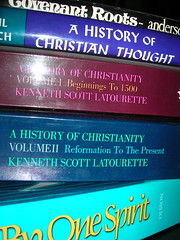
A large number of Luther’s letters and treatises have been published and many focus on ecclesiology as one of his central concerns. Perhaps two that address such issues most directly are his works Concerning the Ministry and The Babylonian Captivity of the Church.
Concerning the Ministry was written to the churches in Bohemia who were currently in dissent from Rome over the issue of serving wine to the laity during the Eucharist. The Roman Catholic Church had adopted the practice of withholding the wine from the laity, only allowing the priest to partake. The Bohemians felt that the laity should be able to partake in both the bread and the wine. In response to their dissent, Rome had refused to appoint an archbishop in Bohemia. The Bohemians began sending their clergy to sympathetic bishops in Italy for ordination. During the ordination, Bohemian clergy were asked if they would withhold wine during communion. They would verbally assent, but upon returning to Bohemia would continue their dissent.
Luther was asked to write a letter advising the Bohemians how to proceed. His answer highlights his understanding of ordination. Luther argued that the Bohemians had every right to begin ordaining their own clergy. For Luther, the efficacy of ordination was not located in Rome but in the faith of the congregation and the character of the
minister. It was appalling to Luther that Italian bishops would ordain priests without any knowledge of their character and with the understanding that they would compromise their vows to withhold the wine. Ordination must be placed within the congregation and under the authority of bishops elected by the people who could judge the character of the clergy.
This understanding of ordination was tied to Luther’s understanding of the functional nature of the clergy and the priesthood of all believers. For Luther, Christ alone was the great high priest. By virtue of baptism all believers were a part of the priesthood. To set any individuals apart as priests was to do violence to the nature of Christ as the singular high priest. Luther further elaborates his understanding of the high priesthood of Christ in his work The Babylonian Captivity of the Church. In this work, Luther outlines his understanding of the sacraments. He argues for three sacraments: baptism, Eucharist, and penitence over against the seven sacraments present in the Roman Catholic Church. He reframes each of these sacraments in light of the high priesthood of Christ.
The Roman Catholic Church, as highlighted in Gregory the Great’s Pastoral Rule, understood the Eucharist as an act of sacrifice. During the Eucharist, the priest once again offered the sacrifice of Christ to God on behalf of the people. Luther argued that Christ in his work on the cross offered the only sacrifice necessary. As the great high priest, Christ’s work was sufficient and there was no need for further sacrifice on the part of the people. The priest no longer did the work of sacrifice. Instead the Eucharist became a promise and testimony to the work already accomplished in Christ. The priest only served to offer up prayers on behalf of the people.
Luther’s concepts of ordination and the pastoral office were central to the Protestant Reformation. They shifted efficacy from the institution of the church to the local congregation. Ministry was placed into the hands of the people. All were called to teach, pray, and work as part of the priesthood of all believers. The church was the gathered people of God where the Word was preached and the sacraments rightly administered. Luther did not do away with hierarchy. He challenged the efficacy of the existing hierarchy and argued for its reform. The world was still divided into three estates: civil authorities, the clergy, and the laity. Luther’s work initiated the building of a new church structure with a new hierarchy, and 100 years later another group of clergy would challenge its efficacy.

Friday, April 10, 2009

Lenten 3: The Suffering to Come


Mark 8:31 Then he began to teach them that the Son of Man must undergo great suffering...
The disciples were just beginning to grasp who this was that they were following. Peter had declared, "You are the Messiah!" But with that declaration came the full weight of what was to come. The Messiah was to suffer greatly... As our faith deepens and grows, we are faced with the complexity of the one we follow and the depth of suffering involved. How will we respond?


Mark 8: 31 Then he began to teach them that the Son of Man must... be rejected by the elders, the chief priests, and the scribes...
Rejected... thrown out, discarded, discounted, perceived as useless. Those who rejected Jesus would eventually do more than just ignore him. How do we in our own lives reject Jesus in subtle and not so subtle ways? When do I perceive Jesus as useless in my own life? Are there times when I place Jesus on the curb? Or simply fail to see his presence?


Mark 8:31b ... the Son of Man must undergo great suffering... and be killed, and after three days rise again.
Three days... why was there a waiting period between Christ's death and resurrection? Thank goodness we had a warning. A reason not to give up all hope. Not that very many people remembered it at the time. What are the glimpses of hope God gives us? Clues to what will unfold? And how often do we lose sight of them in the midst of life's crises?


Mark 8:33b... "Get behind me, Satan! For you are setting your mind not on divine things but on human things."
So, here are a few of my "human things." I don't think this verse should ever be taken to me that God does not care about our physical bodies or our material needs. It does, however, remind us that we can sometimes lose perspective when God does things that don't fit with our plans for this world. What are the "human things" that I am thinking of these days that I need to put aside?


Mark 8:34b "If any want to become my followers, let them deny themselves and take up their cross and follow me."
Stop! You're going in the wrong direction! Jesus calls to the crowd and challenges them to follow him. Generally, I like to choose my own path... follow my own directions. I hate one way streets. They force you to go where you don't want to... and to be honest, the path that Jesus is calling his disciples to doesn't sound very appealing. Taking up crosses, denying self, losing life. Lent is a time to walk in the anxiety of the disciples... followers before the assurance of the resurrection. And to seek again the direction we are called to go.


Mark 8:35 For those who want to save their life will lose it, and those who lose their life for my sake... will save it.
We have created a society that says it strives to save lives... Unfortunately, with all our technological advances, we seem to only save a portion of our world. Those with wealth and means, access to resources. Perhaps this is what Christ was speaking against when he called his followers... those who sought to save only their own lives.


Mark 8:36 For what will it profit them to gain the whole world and forfeit their life?
A graveyard in the shadow of the city... reminding us that now matter what we gain in this world it is temporary. Christ challenges us to live in the light of eternity rather than this world. A reordering of our perspectives...

Thursday, April 09, 2009

Lenten 2: Jesus Baptism and Wilderness Experience


Mark 1:9 In those days Jesus came from Nazareth of Galilee and was baptized by John in the Jordan...
I wonder what the Jordan River was like when Jesus was baptized? Namaan didn't think much of the Jordan when he was told to wash seven times in it to cure his leprosy... For some reason we assume the water must be clean... and yet it is not the water that cleans in baptism, but the Spirit of God which can make all things clean.


Mark 1:11 And a voice came from heaven, "You are my Son, the Beloved: with you I am well pleased."
It is when I behold the beauty of creation that I most clearly hear God's voice saying to me that I am beloved... What a gift it is that God gave us such beauty!


Mark 1:11 And a voice came from heaven, "You are my Son, the Beloved; with you I am well pleased."
My nieces... beloved daughters of God.I cannot imagine what it must have been like for Jesus. The adopted son of Joseph, had he ever heard his father's voice before? Was this the first time his father had told him he was beloved? That he was pleased with the man he had grown up to be? I long for that audible voice from God myself at times... I know we are to walk by faith, not by sight or sound, and yet... Am I beloved by God? Christ's death and resurrection assure me of this. Is God well pleased? I suppose that is part of what Lent is about. Searching our hearts and asking if we are living a life that is pleasing to God.


Into the Wilderness....


Mark 1:13 He was in the wilderness forty days, tempted by Satan; and he was with the wild beasts; and the angels waited on him.
I must admit that I understand very little about angels. What I do know is that when we are in the wilderness, whether for forty days or forty years, God tends to us. The temptations are not removed. The anguish does not necessarily subside. Yet we are not left alone in our grieve or our trials.


Mark 1:14-15 Now after John was arrested, Jesus came to Galilee, proclaiming the good news of God, and saying, "The time is fulfilled, and the kingdom of God has come near; repent, and believe in the good news."
It's no wonder John had questions for Jesus (Matt. 11:7ff). Soon after realizing his cousin was the coming Messiah, he ends up in jail. His ministry has, in effect, come to an end. I wonder what John thought when, from behind bars, he heard "The time is fulfilled, and the kingdom of God has come near"? The kingdom is rarely what we expect it to be... and so we often miss the signs. During this season of Lent, my we have eyes to see the nearness of the kingdom among us.


Mark 1:15 "The time is fulfilled, and the kingdom of God has come near; repent, and believe in the good news."
First John's proclamation... then Christ, himself. Now we too are to carry on the work of proclaiming the good news. The kingdom of God has come near. Repent and believe.